Parson Russell Terrier in Canada: Temperament, Training and an Honest Ownership Plan
A practical Parson Russell Terrier guide for Canada: CKC breed distinctions, safe exercise and recall, coats, breeder health screening and a sustainable family routine.
The decision before the photograph
The Parson Russell Terrier can look like a neat, portable companion: mostly white coat, bright expression and a frame smaller than many family dogs. That first impression hides the more useful question. Would your household enjoy living with a dog originally designed to follow a hunt, search for quarry and keep working when excited? A Parson can settle indoors after the right outlets, but its capacity for persistent investigation does not disappear at the front door. Choosing one should start with the routine you can sustain, not the dog's height.
A successful match has time for daily walks that permit sniffing, brief reward-based training, supervised problem-solving games and recovery. A fenced yard can help, but a yard without human involvement is not an exercise programme. Apartment living is possible for some individuals, provided neighbours, sound sensitivity and access to stimulating walks are considered. If the only available activity is a rushed trip around the block, this lively breed deserves a different arrangement. That is an ownership fit question, not a criticism of the dog.
Parson Russell versus Russell Terrier versus Jack Russell
In Canada, names are worth checking before placing a deposit. The Canadian Kennel Club describes the Parson Russell as the taller, nearly square-shaped working terrier, while the separately listed Russell Terrier is shorter, roughly 25–30 cm at the shoulder, and more rectangular in outline. Parson males are ideally about 36 cm and females about 33 cm under its breed standard. These proportions help clarify the distinction; they cannot substitute for documented ancestry, registration or a careful assessment of the individual animal.
“Jack Russell” is a widely used household name and can be applied differently by clubs and sellers. It is not a reliable shortcut for identifying the specific CKC registered breed. Ask for the exact registration designation, the names of both parents and the breeder's understanding of the line's activity levels. For a rescue, the label may simply describe an appearance; that does not reduce the animal's value. It does mean you should make decisions from observed behaviour rather than expect pedigree predictions from a photo.
What the CKC standard actually says
The Canadian Kennel Club presents the Parson as workmanlike, agile, balanced, bold and friendly. It is a description of breed purpose and an ideal of sound structure, not a promise that every puppy will be fearless, sociable or easy to manage. The predominantly white coat may carry tan, lemon or black markings, and coats can be smooth, broken or rough. A breeder who talks only about coat patterns while avoiding temperament, movement and health is missing the important part of the standard.
Its original job involved travelling with horse and hounds and pursuing quarry underground. That history explains why scent, rapid movement and confined hiding places can be intensely interesting. It does not justify unsafe modern chasing, nor does it mean every Parson will display identical prey behaviour. Your work is to build acceptable outlets and reliable management. Observe how a prospective puppy explores, recovers from a surprise and responds to gentle social contact, then discuss those observations with the breeder rather than asking for a guaranteed temperament label.
A realistic weekday timetable
Think in blocks of purposeful activity rather than one magic number of exercise minutes. A typical adult's weekday might include a relaxed sniff walk before work, a food puzzle during a supervised break, a training-and-play session after work and a short evening outing. The intensity and duration depend on age, conditioning, temperature, physical health and behaviour. Very young puppies need short, developmentally appropriate experiences and rest; they do not need to be marched to exhaustion to suppress normal puppy energy.
Keep a weekly record of what actually calms the dog. If longer walks consistently produce an overtired, more frantic animal, add rest and reduce intensity rather than escalating distance. If the dog settles after a twenty-minute scent activity but paces after endless ball throwing, the problem may be arousal rather than a shortage of kilometres. A trainer using humane, reward-based methods can help interpret persistent frustration or inability to settle. Build the schedule around healthy behaviour, not an exercise target printed without context.
The outdoor safety contract
A strong prey response can make a squirrel, rabbit or roadside movement more compelling than a familiar recall cue. Keep the dog leashed near traffic, wildlife and unsecured trails, and test recall gradually in a secure environment with increasing distractions. A long line can offer greater freedom without gambling on an untrained return. Check that harnesses cannot be backed out of and that fences have no gaps at ground level. A determined little terrier can find an overlooked opening surprisingly quickly.
Use gates and predictable routines when household doors open. Supervision matters around gardens, compost and small pets, where digging and curiosity can become safety issues. Canada's seasons add practical constraints: icy pavement may reduce traction, deep snow may limit a small dog's movement and summer heat can turn an energetic walk into a hazard. Carry water, choose safe footing and adjust the session instead of equating a dog's enthusiasm with physical safety. Tick checks after brushy trails are prudent, with veterinary advice on regional prevention.
| Scenario | What can work | What to address first |
|---|---|---|
| Condo with shared walls | Daily sniff walks and consistent routines | Hallway barking, quiet settle training |
| House with fenced yard | Supervised digging and play area | Digging under fences, door manners |
| Home with cats or rabbits | Managed separation, careful introductions | Prey interest and safe physical barriers |
| Working household | Scheduled care and short training | Toileting, enrichment and separation skills |
Training without turning everything into a contest
Parsons learn quickly and may also learn that barking, grabbing a toy or dodging a leash gets attention. Teach useful replacement behaviours before an exciting situation: go to a mat, release an item, check in on a walk, wait at a doorway and return for a reward. Start when the environment is easy; advance only when the dog can succeed. Avoid confrontational corrections that heighten arousal, damage trust or create defensive behaviour. Consistency is especially useful in a household where different people otherwise reward different rules.
Use short, varied sessions ending before frustration appears. For a recall exercise, pay generously for voluntary returns, never call the dog solely to end all fun, and use an attached line until performance is reliable. For digging, a designated digging area with hidden safe toys can be more humane than fighting a deeply reinforced instinct. A trick, scent search or simple agility foundation is not just entertainment: it provides cooperative tasks with clear rules and reinforces attention around distractions.
Barking: listen to the trigger, not the label
A terrier that vocalizes at a hallway sound might be alarmed, excited or repeatedly rewarded by the event ending after barking. Identify the context before choosing a response. If the dog barks every time somebody passes the window, blocking the view while teaching a calm alternative can prevent rehearsal. If barking happens during isolation, do not assume boredom: distress on separation requires a slower plan and possibly qualified behaviour support. Punishing noise without addressing the cause can worsen worry.
In an apartment, teach the dog that ordinary building noises predict something non-threatening. Play sound at a low level or use naturally quiet moments, reward settled behaviour and allow retreat to a comfortable area. Keep a log of timing and intensity, especially if neighbours report a pattern you do not hear while away. The goal is a manageable dog who can recover from stimulation, not unrealistic absolute silence. Neighbour tolerance, building rules and your own ability to work on habits belong in the decision before adoption.
Children, visitors and play styles
An energetic terrier may love interactive games, yet that enthusiasm can overwhelm a small child. Adults should supervise all child–dog contact, provide the dog with a resting place that cannot be invaded and stop games before chasing and grabbing become too intense. Children should not take food, disturb sleep or pull a dog out of hiding. A growl is information that distance is needed, not a behaviour to punish into disappearance. Any biting concern warrants qualified help and practical separation while a safe plan is developed.
Visitors are easier when greetings have a routine. Offer a food scatter away from the doorway, cue a mat or use a barrier while coats and shoes are removed. Introductions can take place when movement has slowed and the dog is able to choose a calm approach. Owners sometimes encourage high-energy jumping because the dog is small; that habit can still be unpleasant or dangerous to frail visitors. Teach an alternative early, and remember that friendliness with familiar adults says little about comfort with every child or strange dog.
Other dogs, cats and small animals
Sharing a home with another dog is possible, but history, sex, social learning and individual tolerance matter more than an online assertion that all terriers are dog aggressive or universally sociable. Arrange parallel walks for introductions, avoid competition over favourite items and ensure each animal has undisturbed food and rest. Intervene early when tension appears. Do not rely on a dog park to produce social skills; crowded, poorly managed interactions can amplify chasing and conflict rather than create good manners.
A strong predatory interest makes coexistence with rabbits, rodents and some cats especially sensitive. Socialisation does not erase instinct, and an individual who appears calm behind a barrier may react differently when an animal runs. Use secure, species-appropriate enclosures and physical separation, and never leave vulnerable pets alone with a dog on the assumption that yesterday went well. For adult rescue dogs, seek a realistic assessment from the people who have seen the animal around other species, while keeping management in place until behaviour is genuinely understood.
Smooth, rough and broken coats
The CKC accepts naturally harsh, close, dense coats in the Parson. Smooth coats often need regular brushing to remove loose hair, while broken and rough coats can benefit from appropriate hand-stripping or specialised grooming depending on the individual coat and owner's goals. A show presentation may require a particular finish, but a companion's priority is skin health and comfort. Ask a groomer experienced with harsh terrier coats what maintenance fits the dog's texture before deciding that shaving is the default treatment.
Look beyond grooming aesthetics. Check the skin after outdoor activity, inspect paws and interdigital spaces for debris, and examine ears when the dog has been through wet vegetation. Introduce handling in small rewarded steps: show the brush, touch a shoulder, reward, then gradually increase the duration. For a dog who avoids touch, reduce the task and seek veterinary input if discomfort is new. Good grooming is also a useful early warning system for lumps, parasites, matted patches and changes in mobility.
Feeding an athletic small dog sensibly
Choose a complete food appropriate for the dog's life stage and medical needs, and use the product feeding directions as a starting estimate rather than a guarantee. Body condition, growth, activity and neuter status influence actual requirements. A small, active dog can still gain weight from frequent treats, chews and table food. Instead of guessing a universal calorie number, ask your veterinarian to establish an individual target, then weigh meals and track body condition over time.
Use some of the regular ration for training rather than layering unrestricted rewards on top. Food toys and scattered kibble can make meals interesting without creating a dietary imbalance. Introduce new food gradually when practical, and keep fresh water accessible, especially after vigorous activity or in dry heated homes. Sudden refusal to eat, repeated vomiting, obvious weight loss or changes in drinking need professional assessment. Never interpret a breed's reputation for toughness as a reason to ignore illness.
| Coat type | Core care | When to ask for help |
|---|---|---|
| Smooth | Brush out loose coat and check skin | New irritation or persistent scratching |
| Broken | Comb rough sections and maintain comfort | Ask groomer about coat texture |
| Rough | Assess hand-stripping versus companion needs | Use experienced harsh-coat professional |
| All types | Paws, ears, nails, teeth and body condition | Painful handling or new skin changes |
Puppy socialisation: quality over exposure counts
Good socialisation is not forcing a puppy to meet fifty dogs or remain in an overwhelming shop. It means arranging manageable, positive experiences with varied people, surfaces, noises, gentle handling and everyday household activity. Let the puppy choose to approach or retreat, and reward recovery after mild novelty. Discuss vaccine-related exposure precautions with your veterinarian rather than avoiding every experience until well after the most flexible learning period. The appropriate balance depends on local infection risk and the settings available.
Include quiet skills from the beginning: settle on a mat while a meal is prepared, rest behind a baby gate, accept a short grooming touch and watch a jogger pass from a safe distance. A confident puppy may still become reactive during adolescence as independence increases and chasing becomes rewarding. Return to easy exercises when that occurs. Avoid relying on the owner's charisma or the puppy's early friendliness. Good habits result from repetition and thoughtful setups over months, not one puppy class certificate.
Choosing a breeder in Canada
The CKC's accountable-breeder guidance gives a useful starting point: look for relevant health testing, clear parentage, veterinary documentation, a microchip, and a breeder willing to educate and support families. Registration alone cannot prove good socialisation or guarantee health. Ask to see actual test records for both breeding parents and have the names or numbers available for verification where a registry permits it. A seller who claims testing was done but cannot provide records has not answered your question.
Ask how pups are raised, what early handling they receive, what contract and return arrangements apply, and what happens if the match proves unsafe or impractical. A responsible seller should ask hard questions about your home too. Be wary of guaranteed dispositions, pressure to transfer money immediately, and claims that an unusual marking makes a puppy medically superior. If you are adopting from a rescue, prioritise observed behaviour, records, existing medical needs and a realistic transition plan rather than pedigree paperwork that may not exist.
Health screening: ask for the evidence
The American Kennel Club's breed-club health-testing page lists patella evaluation, an eye examination by a specialist and BAER hearing testing for Parson Russell Terriers. Other relevant hereditary tests may be discussed within particular lines, including primary lens luxation and inherited ataxias; the availability of a DNA assay is not proof that every puppy requires every test or that a negative panel eliminates all disease. Ask a veterinarian or knowledgeable breed-health contact which tests are appropriate for the parents and the known family history.
When discussing a test result, distinguish a screened parent from a cleared puppy and a genetic carrier from an affected dog. A responsible breeding decision considers the whole dog, including soundness, behavioural stability and genetic diversity. No breeder can promise zero disease. Maintain regular veterinary visits, vaccinations and dental care after purchase; good genetics does not replace monitoring. Sudden squinting, apparent vision loss, collapse, seizures or a new coordination problem are reasons for prompt veterinary assessment, not internet-based diagnosis.
Dental health and routine veterinary care
Small dogs can accumulate dental disease that owners dismiss as “dog breath.” Introduce tooth brushing gradually with dog-safe products and ask a veterinarian to assess gums and teeth as part of preventive care. Hard objects that cannot be indented by a fingernail may risk broken teeth; ask about suitable chewing choices for the individual dog. Home cleaning cannot replace veterinary treatment of painful periodontal disease beneath the gumline. Bad breath with drooling, facial swelling or refusal to chew deserves attention.
Keep records of vaccinations, parasite prevention, medication sensitivities, body weight and any repeated ear, skin or digestive issues. Talk to your clinic about provincial tick conditions, travel plans and boarding requirements. A young energetic terrier can look normal while hiding discomfort, so changes in willingness to jump, climb or accept handling matter. Emergency signs such as breathing distress, repeated collapse or suspected toxin ingestion need immediate veterinary support. A breed guide should help owners spot when to seek care, not encourage self-treatment.
Canadian winter and spring mud
A Parson's confident energy does not mean every dog is comfortable on salt-treated pavements, ice or deep snow. Check paws after walks, rinse irritating de-icer residue and dry between toes when practical. A well-fitted coat may be useful for an individual with a short coat during extreme cold, but comfort varies with wind, moisture, age and health. Watch the dog, shorten exposure when shivering or lifting paws, and choose indoor scent games when footing is poor.
As snow retreats, muddy brush and tall grass make tick management increasingly relevant. The Public Health Agency of Canada advises checking pets after outdoor exposure and discussing prevention with veterinarians; the local risk varies by province and conditions. Do not use human tick treatments on a dog or assume an old prescription remains right for a puppy's weight. Travel to another province can change exposure. Make seasonal adjustments part of the activity plan rather than abandoning enrichment for weeks when trails become less convenient.
Heat, hydration and summer exercise
Excited dogs are not always reliable judges of their own heat tolerance. On hot, humid days, move energetic outings to cooler periods, provide water and shade, and avoid heavy bursts of exercise on hot pavement. Evaluate conditions where the dog actually walks: an exposed sidewalk may be much hotter than air temperature suggests. Watch for unusual panting, weakness, vomiting, confusion or collapse. Suspected heat illness is urgent veterinary territory, with careful cooling advice obtained from a clinic.
Swimming and water games can be enjoyable for some Parsons, but not all dogs swim well. Use a properly fitted canine life jacket for boat outings and supervised water activity, check for currents and blue-green algae advisories, and rinse and dry the coat afterwards where appropriate. Do not treat lake visits as automatic exercise substitutes; unfamiliar water can add stress and risk. A summer routine might be shorter, calmer and more focused on smell-based exploration than the outdoor programme you used in cool weather.
Apartment, condo or rural home?
A small footprint does not guarantee a good apartment companion. The relevant issues are barking, arousal after hallway noises, bathroom access, elevator manners and the household's willingness to provide daily outdoor and mental activity. Before adoption, consider shift-work schedules, the building's pet rules and whether neighbours have close shared walls. A dog who can settle may live well in a condo, while another may struggle in a large house without companionship or appropriate training.
Rural homes bring different risks rather than automatic freedom. Open land can mean wildlife, livestock, road traffic, hunting activity and hard-to-secure boundaries. A high-prey-interest dog must still learn recall on a line and be prevented from pursuing vulnerable animals. Regardless of property size, plan for safe containment, supervised outdoor time and quiet indoor rest. The best home is one where the owner can consistently meet the dog's needs, not the one with the largest yard advertised online.
| Ask about | Useful evidence | Not enough by itself |
|---|---|---|
| Eyes | Parent ophthalmologist evaluation | Puppy looks bright in photographs |
| Hearing | BAER records where relevant | Dog reacts to doorbell |
| Patellas | Parent patella evaluations | Breeder says joints feel fine |
| Other inherited risks | Family history and relevant DNA records | “All puppies genetically perfect” |
Working with a rescue adult
Rescue can be an excellent choice when an adult dog's actual habits are clearer than a puppy's future temperament. Ask for observed behaviour around strangers, other dogs, handling, noise and time alone. Distinguish what the dog has demonstrated in a home from impressions formed in a noisy shelter. A statement such as “good with cats” should lead to questions about context and supervision. The first weeks should be predictable: regular meals, safe resting space, gentle walks and limited novelty.
Do not overwhelm a newly adopted Parson with a parade of visitors and dog-park trips meant to “socialise” it quickly. Establish a practical routine, then add experiences gradually as you see how the dog recovers. For behaviour concerns, seek a qualified reward-based professional and veterinary examination where pain or illness may contribute. A return arrangement and contact with the rescue can protect both dog and family if the match is unexpectedly difficult. Commitment includes seeking help early, not hiding serious problems out of embarrassment.
Travel, boarding and being home alone
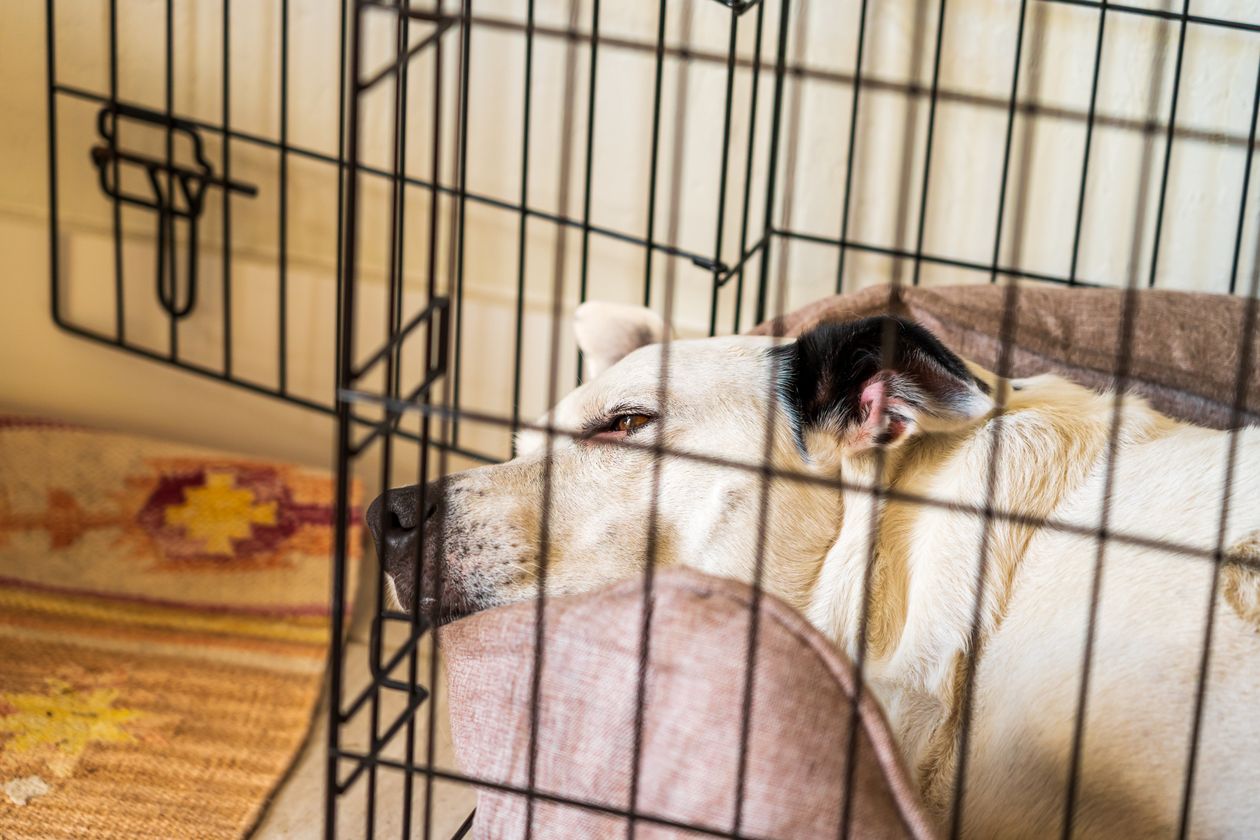
Owners who travel often should practise safe confinement, car restraint and short absences before a long trip or first kennel stay. Train the dog to rest in a crate or comfortable gated area without turning confinement into punishment. A vehicle restraint or travel crate should be appropriately sized and securely installed. Never leave a dog in a parked vehicle in warm or cold conditions; temperatures can become unsafe even during what feels like a short errand.
Discuss boarding vaccinations and temperament requirements with the facility, then trial a short visit if possible. Some high-energy terriers thrive with familiar sitters and predictable routines rather than busy group play. If the dog panics during separation, barking or destructive behaviour is not proof of stubbornness. Seek advice rather than repeatedly exposing it to increasingly long absences. Travel flexibility is a genuine ownership cost, along with backup arrangements for illness, work changes and emergencies.
A cost and time plan without invented prices
There is no reliable single Canada-wide price for acquiring or maintaining a Parson Russell Terrier. Provincial service costs, insurance terms, food, veterinary care and grooming vary widely. Build your own written budget with separate lines for adoption or purchase, initial veterinary examination, vaccinations, parasite control, training, equipment and an emergency reserve. Ask local clinics and insurers for current quotes. Beware of treating an advertised puppy price as the full financial cost of bringing a dog home.
Time is often the greater constraint. Map a working week and mark who handles morning walks, calm training, daytime relief, grooming and vet appointments. Include bad-weather alternatives and care when household members are ill. A puppy may require much more frequent supervision than an adult. If the schedule works only when nobody is late and the weather is perfect, it is not yet a robust plan. A realistic budget and contingency plan are a kindness to the animal and to the people sharing its care.
The first two weeks at home
Set up essentials before arrival: measured food, water, safe sleeping area, secure gates, a lightweight harness, leash, identification and an appointment with your veterinarian. Keep the initial routine boringly consistent rather than testing every possible adventure. Let the dog investigate at its own pace and reward simple voluntary check-ins. Prevent access to electrical cords, bins, medications and small objects. If children live in the household, rehearse the dog's private resting-zone rules before the dog comes through the door.
Record appetite, elimination, rest and responses to ordinary home sounds. Early accidents, interrupted sleep and a temporarily reduced appetite can occur during adjustment, but illness symptoms must not be dismissed as settling in. Follow existing food and medication instructions and check unknown history with a professional. Arrange controlled, positive experiences, not a rushed marathon of guests. By the end of two weeks, the aim is predictability and trust; elaborate obedience performances can wait until the dog feels secure.
The three-month behaviour review
After the initial honeymoon, take stock of what the dog actually does. Can it rest while somebody cooks? Walk past ordinary distractions without rehearsing lunging? Recover after an unexpected noise? Stay briefly alone without distress? Accept basic grooming and handling? These measures are more useful than whether a puppy has learned five tricks. Identify two or three weak points and create simple, achievable practice scenarios, rewarding small steps instead of chasing instant perfection.
Update the exercise plan as maturity and health change. An adolescent may need easier challenges again even after a promising puppy phase. Review your safety gear and fencing, because growth can affect harness fit and escaping skills. Check whether everybody in the household follows the same cues and boundaries. Where progress stalls, ask a reputable trainer for observation rather than escalating aversive methods. Good training is a continuing relationship: flexibility and prevention usually matter more than a rigid timeline.
Common decisions and quick answers
A Parson is not simply a longer-legged version of every dog sold as a Jack Russell; Canadian breed registrations distinguish the taller Parson from the shorter Russell Terrier. Neither appearance nor pedigree alone determines suitability. An active family that enjoys training and controlled outdoor pursuits may make a better match than a household expecting a self-exercising lapdog. Apartment success is possible, but barking and daily enrichment deserve a realistic trial plan, especially with shared walls.
The coat is not hypoallergenic, and harsh-coat maintenance varies with texture. Do not promise that smooth, broken or rough coats never shed. Health screening should be documented, not inferred from a parent looking lively. Other pets require case-by-case management because chase instincts can be strong. If your main attraction is the small size, compare the dog's job history, likely household arousal and your backup care options before deciding. The right choice is the dog whose needs you can consistently meet.
An informed final choice
A Parson Russell Terrier can be an engaging companion for people who appreciate enterprise, humour and cooperative activity. The same drive can become troublesome when visitors, small animals, noise and unpredictable routines collide. Good ownership begins by naming those risks without exaggerating them. Meet adult examples where possible, speak with responsible breeders or rescues, verify health information and spend time imagining an ordinary February Tuesday rather than an ideal summer weekend.
If you enjoy building habits, preventing unsafe chase opportunities and investing in gentle training, the breed may fit very well. If you need a reliably quiet, low-effort dog that can routinely be left without planning, make a different shortlist. Temperament varies within every breed, and no written profile replaces observing the individual. Treat this guide as a framework for questions to ask—not a guarantee, medical diagnosis, exercise prescription or permission to disregard local animal-control rules.
Safety note: This is an editorial breed guide, not a medical diagnosis or an individual exercise, training or treatment plan. A veterinarian should assess new symptoms, pain or suspected illness; qualified humane-behaviour support is appropriate when safety is a concern.
Sources and evidence review
Primary sources were reviewed 16 October 2026. Breed standards describe ideals; parent-club screening recommendations can change. This article does not claim a personal kennel visit, veterinary sign-off or unverified Canadian price survey.
- Canadian Kennel Club — Parson Russell Terrier
- Canadian Kennel Club — Russell Terrier comparison
- CKC — Group IV Terrier breed standards
- AKC — Terrier breed-club health testing
- University of Missouri — Breed DNA testing menu
- CKC — Finding an Accountable Breeder
- Public Health Agency of Canada — Lyme risk and prevention
Related Patify reading
Dog enrichment ideas Kerry Blue Terrier Guide Affenpinscher Breed Guide
Cover image: Dwietwarze · original photograph · CC BY-SA 3.0. Display may be cropped by the website layout.