
Last verified: October 1, 2026
Scent Work for Dogs: Start With Searching Before You Add Target Odor
Quick answer: the easiest way to start nose work at home is food search → hidden food → hidden toy → optional target odor → independent search → clear alert → new environments. You do not need competition equipment on day one.
AKC Scent Work is a formal dog sport modeled on detection work. In the Odor division, dogs search for birch, anise, clove and cypress; Novice begins with birch. But AKC also offers virtual searches using treats, toys and balls, making simple household searching a legitimate foundation before essential-oil odor work.
Patify nose-work rule: first teach the dog that using the nose independently earns reinforcement. Only then worry about formal target odor, indication style or competition-level search patterns.
Scent Work, Nose Work and Sniff Games: What Is the Difference?
People use the terms loosely:
- Sniff game: any enrichment activity where the dog searches for food, toys or people using scent.
- Nose work: commonly used for structured scent-search training; “K9 Nose Work” is also associated with NACSW methodology/branding.
- AKC Scent Work: a formal competition program with specific target odors, search elements and levels.
You can enjoy scent games without ever competing. For a beginner, that distinction prevents unnecessary complexity.
The Seven-Stage Scent-Work Ladder
| Stage | Dog learns | Handler goal |
|---|---|---|
| 1. Visible food search | Nose/searching pays | Get out of the way |
| 2. Hidden food / containers | Odor leads to reward | Reward at source |
| 3. Toy or handler scent | Search for a non-food source | Keep criteria simple |
| 4. Target odor | Specific odor predicts reward | Avoid contamination |
| 5. Alert behavior | Stay/communicate at source | Read natural change of behavior |
| 6. Generalize | Same game in new spaces | Change one variable at a time |
| 7. Exterior search | Work through airflow/distractions | Trust dog, manage environment |
Stage 1 — Start With Easy Food Searches
VCA recommends simple scent enrichment such as hiding treats or toys around the home/yard. AKC’s indoor scent-game guidance uses the same idea.
- Let your dog watch you place 3–5 treats in easy visible locations.
- Say a search cue such as “find it.”
- Let the dog move independently.
- Do not point to each treat.
- When the dog understands the game, make the placements partly hidden.
The lesson is independence: nose leads to reinforcement.
Stage 2 — Build a Beginner Container Search
Use several open cardboard boxes.
- Place food in one box while the dog watches.
- Release the dog to find it.
- Feed/reward directly at the correct box.
- Move the food between boxes across repetitions.
- Then let the dog wait out of sight while you hide it.
- Gradually add empty boxes and spacing.
Avoid placing food in every box. You want “find the source,” not “check box one because every box pays.”
Stage 3 — Search for a Toy or Familiar Human Scent
If your dog loves a toy, hide it partly out of view and reward the discovery with play. AKC’s Virtual Scent Work program includes searches for treats, toys and balls, so this is useful even for people interested in titles later.
You can also teach a simple family-member hide-and-seek game: one person hides nearby while another releases the dog to search. Keep it safe and easy rather than turning it into amateur search-and-rescue training.
Stage 4 — Introduce a Formal Target Odor Only if You Want Structured Scent Work
AKC Scent Work uses:
- Novice: birch;
- Advanced: birch and/or anise;
- Excellent: birch, anise and/or clove;
- Master: birch, anise, clove and/or cypress.
AKC’s home-training method places prepared odor on cotton swabs in a scent vessel and rewards the dog at source. It also recommends handling odor material carefully with gloves/tweezers to reduce contamination.
Do not apply concentrated essential oil to your dog, food, skin or nose. For formal odor work, use the sport’s prepared-swab/vessel method and store odor materials sealed and inaccessible to pets/children. If you are unfamiliar with odor preparation, a qualified scent-work instructor or reputable preassembled sport kit is the simpler route.
Stage 5 — Your Dog’s Alert Does Not Need to Be a Sit
AKC allows dogs to communicate a find in many ways: nose/body point, sit, down, bark, pawing or another recognizable behavior. Beginners often do better learning to read the dog’s natural “change of behavior” at source before forcing a formal indication.
Possible natural changes
- head snap toward source;
- slower, concentrated sniffing;
- returning repeatedly to one spot;
- freezing or holding nose close to source;
- looking back at handler after locating source.
Reward at the source so the dog learns that locating odor—not looking at you from across the room—is what pays.
Stage 6 — Generalize One Variable at a Time
Change only one thing:
- same odor, new room;
- same room, higher/lower hide;
- same search, different container;
- same layout, mild non-food distraction;
- same hide, slightly larger area.
AKC recommends making sure a dog is confident in familiar low-distraction searches before adding more distracting environments.
Stage 7 — Outdoor Scent Work Changes the Physics
Outside, odor moves with airflow, terrain, temperature and obstacles. Your dog may follow an odor cone away from the physical hide before working back to source.
Do not drag the dog directly to the hide because you “know where it is.” Formal scent work is valuable precisely because the handler learns to trust the dog’s nose.
10 Handler Mistakes That Make Scent Work Harder
- Pointing to the correct box.
- Staring at the known hide and giving it away.
- Repeating “find it” constantly.
- Pulling the leash toward the answer.
- Moving hides too quickly from easy to impossible.
- Rewarding away from source.
- Using contaminated containers/equipment.
- Demanding a sit alert before the dog understands odor.
- Turning every search into a long endurance task.
- Adding new location, new odor and new distraction at once.
Odor Hygiene: Prevent the Whole Room From Becoming the Answer
AKC’s odor-preparation guidance emphasizes gloves, tweezers, sealed storage and avoiding contamination. Practical rules:
- prepare target odor away from the search area;
- handle scented swabs with dedicated tweezers;
- keep odor vessels sealed between sessions;
- do not touch hides and then touch every “blank” container;
- store odor separately from treats/toys when practical;
- clean/retire contaminated equipment.
If every box smells faintly like target odor because your hands transferred it, the dog is learning a different problem than you intended.
Scent Work for Shy, Senior or Mobility-Limited Dogs
AKC describes Scent Work as low-impact and suitable for dogs of varied ages, sizes and abilities. VCA also recommends sniffing/search enrichment for dogs with different physical capabilities.
Adapt the search rather than excluding the dog:
- keep hides at accessible height;
- avoid slippery floors;
- use smaller search areas;
- allow more time;
- avoid forcing interaction with frightening objects;
- keep sessions short and successful.
For a dog with mobility disease, follow veterinary activity restrictions even though scent work itself is comparatively low impact.
Scent Work Troubleshooting Matrix
| Problem | Likely training issue | Fix |
|---|---|---|
| Dog searches visually | Hides too visible / handler points | Use simple hidden source and neutral handling |
| Dog keeps looking at handler | Handler has become the answer | Wait quietly; reward at source |
| Dog races past source | Search too exciting/large | Smaller area, easy source, slower setup |
| Dog gives up | Difficulty jumped too fast | Make hide easier immediately |
| Dog alerts every box | Reinforcement/contamination problem | Use blanks, clean handling, reward only source |
| Dog destroys boxes | Container interaction became the game | Use sturdier setup; reward nose location before pawing/tearing |
| Works indoors, fails outside | Airflow/distraction jump | Very easy outdoor hide in small quiet area |
| Dog sniffs but handler cannot tell when found | Handler-reading skill | Video sessions; learn the dog’s change of behavior |
Patify Dog Training & Enrichment Cluster
- For a different reward-based problem-solving activity, use Patify’s fetch-training guide.
- For foundation cues such as recall, stay/wait and drop/trade, see 7 Dog Commands Every Owner Should Teach.
- For shaping a multi-step body trick with the same “make the criterion smaller” principle, see How to Teach Roll Over.
Frequently Asked Questions About Scent Work for Dogs
What is scent work for dogs?
A structured search activity where a dog uses smell to locate a hidden target and communicates the find to the handler.
Can any dog do scent work?
Most dogs can enjoy scent games, and AKC Scent Work is open to dogs of many breeds, sizes and abilities subject to event eligibility rules.
How do I start nose work at home?
Begin with easy hidden-food searches or container games so independent sniffing is reinforced before introducing formal odor.
What scents are used in AKC Scent Work?
Birch, anise, clove and cypress; Novice begins with birch.
Do I need essential oils to start?
No. Food, toy and virtual-style searches are excellent beginner foundations.
Should I put essential oil on my dog?
No. Formal scent work uses prepared odor on contained cotton swabs, not direct application to the dog.
Does my dog need to sit when they find the odor?
No. AKC permits many alert behaviors; what matters is that the handler can recognize the indication.
How long should a beginner scent session be?
Short enough that the dog remains engaged. A handful of successful searches can be more useful than a long frustrating session.
Can senior dogs do scent work?
Yes, and searches can be adapted to accessible heights, non-slip surfaces and smaller areas.
Why does my dog keep looking at me instead of searching?
You may be giving too much help. Use an easy hide, stay neutral and reward at source.
Why can my dog find it indoors but not outdoors?
Outdoor airflow and distractions make odor problems much harder. Rebuild with very easy outdoor hides.
Is nose work the same as tracking?
No. Tracking follows a trail/path of scent; scent work usually asks the dog to locate a discrete hidden odor source within a search area.
Sources Checked for This Guide
- American Kennel Club — How to Teach Your Dog Scent Work at Home
- AKC — Scent Work 101: elements, levels, target odors and alerts.
- AKC — Getting Started in Scent Work
- AKC — Indoor Scent Games
- VCA — Enrichment and Training: sniffing/search enrichment.
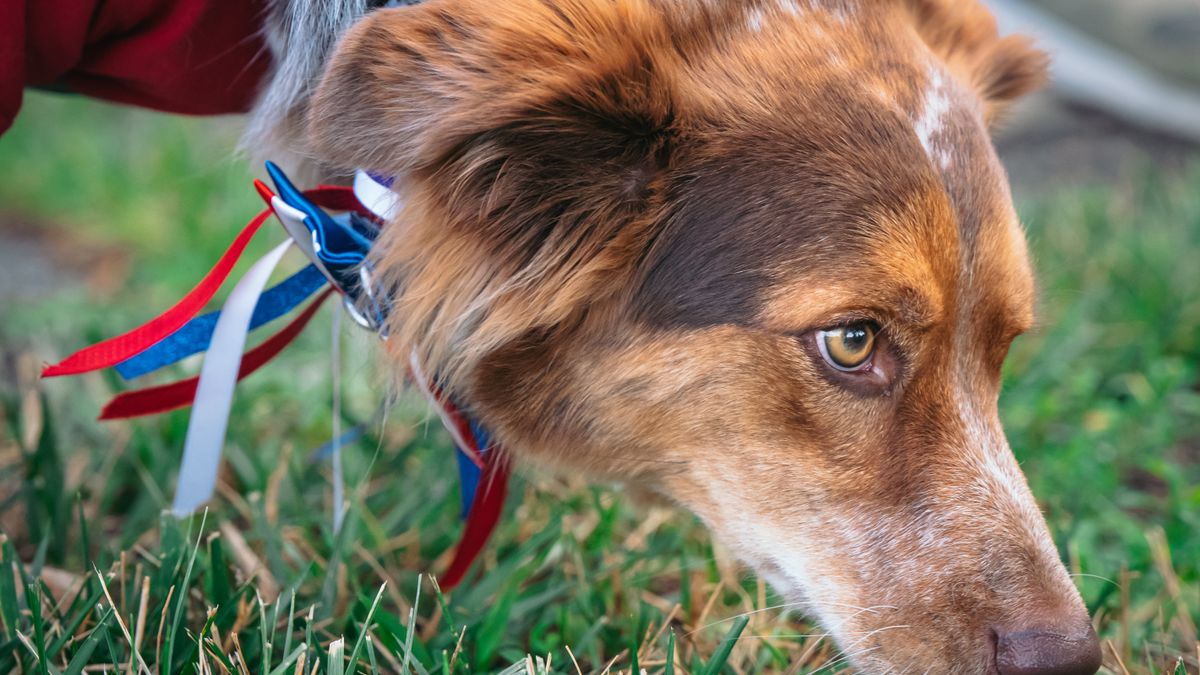
- Pexels — sniffing-dog cover image
- Pexels License
Editorial note: this guide separates everyday sniff enrichment from formal AKC odor work, starts beginners with food/toy searches before essential oil, preserves odor-handling hygiene, and avoids requiring a standardized alert before the dog understands the search. Sources were reviewed October 1, 2026.