

Pygmy Corydoras Care: Build a Tank Where the Whole Group Can Eat
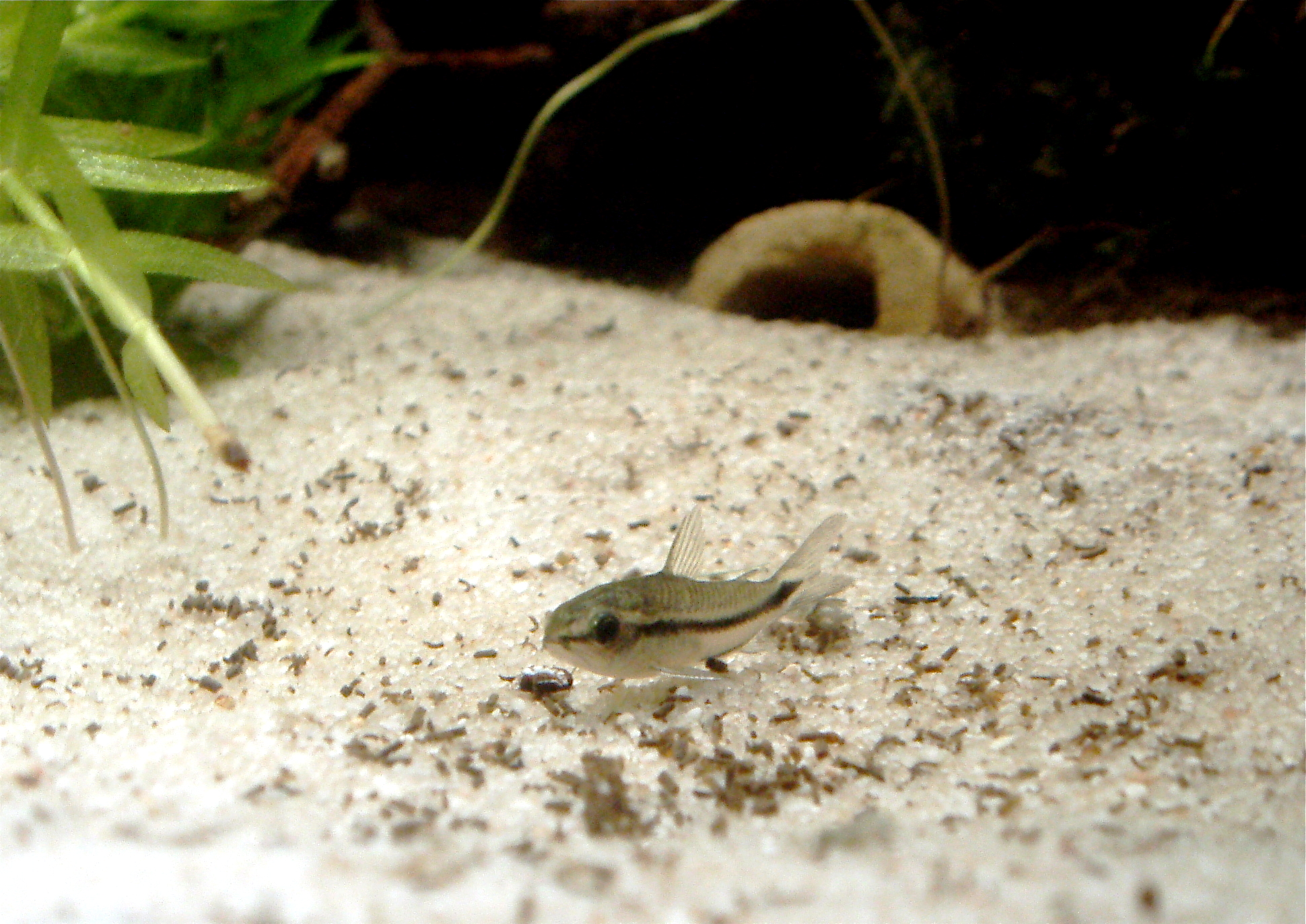
Pygmy corydoras are often sold as miniature bottom cleaners. That description gets two things wrong. They are social fish that need intentional feeding, and unlike many larger corys, they regularly move through the middle of the aquarium. A successful setup gives them an open place to forage, sheltered routes to cross the tank, and food that actually reaches the smallest members of the group. This guide is for a Canadian aquarist deciding whether their existing planted tank is ready—not for someone looking for a shortcut around cycling or filtration.
The short answer: A proper group of Gastrodermus pygmaeus (the current name for Corydoras pygmaeus) belongs in a stable freshwater aquarium with gentle movement, usable horizontal space, smooth or well-maintained foraging surfaces and tiny sinking foods. Seriously Fish lists 22–26°C (72–79°F) and a minimum base of 45 × 30 cm for the species; those are reference parameters, not a universal stocking licence. Group size, other residents, feeding competition and water stability must be assessed together. See the species profile at Seriously Fish and Aquarium Co-Op's pygmy cory care guide for the biological basis.
Get the name and the fish right before you plan the tank
Shop labels may say pygmy cory, pygmy corydoras, Corydoras pygmaeus or Gastrodermus pygmaeus. They refer to the same species under different taxonomic usage. The newer genus is consistent with the major cory-catfish revision summarized in Patify's cory catfish types comparison. Using an older name in a product listing is not evidence of a different animal. However, a label that says only “dwarf cory” is ambiguous: more than one small cory species appears under that informal term.
A pygmy cory is slender and carries a fairly continuous dark horizontal stripe along its side toward the tail. By contrast, the tail-spot species, formerly Corydoras hastatus, is distinguished by its dark patch near the tail base; Hoplisoma habrosum, often called the salt-and-pepper cory, shows broken, mottled markings. The Aquarium Co-Op comparison and Seriously Fish account of Gastrodermus hastatus are particularly useful when a seller's stock photographs or common names are inconsistent.
A blurry online picture should never be treated as a definitive identification. Ask the shop for the scientific name, current livestock photographs and approximate size. When fish arrive in a group, compare more than one individual; colour may look subdued after shipping. If you cannot identify what is being sold, postpone the order rather than assigning species-specific temperature and social guidance to a mixed, unidentified batch.
| Shop or scientific name | Practical identification clue | Why the distinction matters |
|---|---|---|
| Pygmy cory; Gastrodermus pygmaeus | Dark side stripe extending along body | Midwater hovering as well as floor-level foraging |
| Tail-spot pygmy cory; Gastrodermus hastatus | Prominent dark patch at tail base | Different species, even when both are sold as dwarf corys |
| Salt-and-pepper dwarf cory; Hoplisoma habrosum | Broken stripe, blotches and marked tail | More strongly bottom-associated; not identical behaviour |
| Peppered cory; Hoplisoma paleatum under revised naming | Larger, mottled fish | Not a tiny substitute; investigate adult footprint |
Start with the footprint, not a tiny fish's body length
A one-inch fish does not need one inch of aquarium. Pygmy corys are social and repeatedly travel between the substrate, lower plants and open water. A wide, stable tank is more useful than a tall, narrow display with the same nominal litres. The Seriously Fish reference base of 45 × 30 cm (roughly 18 × 12 inches) is a minimum starting point. Many experienced keepers prefer more swimming room and a group larger than the smallest accepted social minimum; a longer tank becomes particularly valuable when other fish occupy similar lanes.
For a practical Canadian shopping comparison, record the internal tank length and width, not only the advertised 10- or 15-gallon number. Retailers use both US gallons and litres, and two nominally 40-litre aquariums can offer very different bottom footprints. A 60 × 30 cm (24 × 12 inch) base provides more continuous routes and separate food locations than a similarly sized tall column. This is a layout example, not an experiment or a universal prescription for how many fish fit.
Before stocking, check whether the aquarium has completed a fishless cycle, and whether ammonia and nitrite are consistently controlled under the tank's normal feeding load. A brand-new tank with clear water has not necessarily developed stable biological filtration. The existing Patify cycling guide explains this first-stage task; it should be completed before delicate new livestock is used to test the system. Small fish provide no special exemption from ordinary water-quality requirements.
Draw three zones that fish can actually use
Picture the aquarium from above before adding fish. Leave a central strip or curved corridor of accessible substrate, put plant or wood cover along two edges, and ensure the quieter corner is not directly under a high-velocity outlet. For pygmy corys, the aim is neither a bare glass box nor a solid jungle. A fish should be able to retreat from movement, swim with other group members and locate food without crossing a permanent rush of water.
Zone A: accessible foraging ground. Leave a clean, lightly covered sand area where tiny sinking foods are visible. Keep any rockwork stable and free of narrow gaps. Zone B: intermediate cover. Small-leaved plants, wood and low-growing foliage break sight lines while leaving passageways. Zone C: a quieter feeding point. A sheltered edge gives cautious individuals somewhere to receive a second portion. The exact configuration is illustrative; there is no claim that Patify built or stocked a test aquarium to validate it.
Broad-leaf, hardscape-attached plants can work as resting platforms and visual shelter. If you already keep Anubias, our Anubias planted-tank placement guide explains how to secure the rhizome without burying it. Do not choose plants because an aquarium photograph looks attractive while ignoring chemical compatibility, light or cleaning access. The fish need safe living space, not a catalogue of expensive décor.
Sand, gravel and the barbel question
Corys have sensitive-looking barbels around the mouth that help them find food. Smooth sand is a forgiving choice because particles of food remain accessible at the surface and foraging can be observed. Small, rounded gravel is not automatically harmful, though large gaps can hide food and collect debris. The Aquarium Co-Op cory care guidance notes that poor water quality and dirty substrate can contribute to barbel deterioration; claiming that every case is caused by a single type of gravel overstates the evidence.
Run a fingertip over any new decorative substrate to check for obviously sharp protrusions and inspect the manufacturer's aquarium suitability information. Once installed, pay attention to where uneaten food settles, particularly beneath dense plants and under wood. Clean accessible substrate during ordinary maintenance without dismantling every refuge. A very fine grain bed can develop compacted areas if neglected; a gravel bed can hide old food. Either material needs a maintenance plan that suits the fish and filter.
If a cory develops damaged or shortened barbels, treat it as a welfare warning rather than a cosmetic inconvenience. Check water tests, substrate cleanliness, injuries and interactions with other fish. Aquatic veterinary advice is appropriate if damage persists, spreads or accompanies abnormal breathing, inactivity or inability to feed. A photograph of one fish is not enough to diagnose a bacterial infection or prescribe treatment.
Social group: count fish, then look at behaviour
Pygmy corys are not happiest as one ornamental curiosity among unrelated species. A same-species group makes it possible for individuals to travel, pause and resume feeding together. Aquarium Co-Op commonly recommends eight to twelve or more for this very small species in an appropriately sized aquarium; Seriously Fish emphasizes group living. More is not automatically better if the tank cannot support the total biomass or enough feeding space. First verify the aquarium can maintain stable water and feed the entire group.
Once settled, a group may hover above plants, perch on leaves, collect near the bottom and make brief trips to the surface. Some of these behaviours surprise keepers who were expecting stationary bottom scavengers. Behaviour also shifts with room activity, feeding and lighting. A shy individual on the first afternoon is not proof the tank is wrong, but prolonged hiding, rapid breathing, thin bellies and repeated food avoidance deserve attention.
Avoid keeping a lone pygmy cory because “the other corys will keep it company.” Mixed species sometimes interact, but species-specific group behaviour is not replaced automatically by six fish with different scientific names. The cory types hub helps compare candidates; this article addresses the day-to-day needs of pygmaeus specifically.
The key feeding test: did every fish eat?
Pygmy corys are omnivorous bottom and midwater foragers, not self-sustaining algae eaters. They need appropriately small, varied food delivered deliberately. Choose a quality micro sinking or slowly sinking formulation and supplement sensibly with small frozen or live foods appropriate for their mouth size. The fish should be seen pursuing or ingesting food, not merely moving above a pile of pellets that larger fish finish first. Tiny particles can disperse through a planted tank; controlled distribution matters as much as the brand on the packet.
Test two feeding points at the same meal. Put part of the food in the accessible foreground, then a separate small portion close to a quieter covered area. Observe which fish arrive within the next few minutes and whether timid individuals get a chance. If fast midwater fish take everything before it descends, adjust feeding sequence or sinking characteristics before increasing the overall ration. Adding lots more food to a competitive aquarium can simply degrade water quality without feeding the intended fish.
The goal is a visible, adequately nourished group and minimal leftovers, not a fixed “one wafer for six fish” rule. Commercial wafers differ radically in diameter, protein, density and disintegration. Read packaging for ingredient composition and intended species; break foods only when the manufacturer's instructions and handling make that safe. A turkey-baster delivery method can be useful for a calm localized feed, but avoid blasting fragile fish or substrate with a jet of water.
| What you see at feeding | What it might mean | Better next check |
|---|---|---|
| Entire group approaches; most fish visibly feed | Food is reaching the group | Observe again when usual tankmates are present |
| Only larger fish get the first portion | Competitive interception | Use an additional sheltered feed site |
| Pellets remain intact under plants | Size or texture may be unsuitable | Compare micro-food size and remove leftovers |
| Fish peck at surfaces but look persistently thin | Ambient grazing is not enough | Confirm actual food intake and seek appropriate advice |
| Cloudy water after a generous feed | Too much food or poor circulation | Reduce waste; test water and review filtration |
A seven-day observation card you can fill in
A useful care record does not require claiming scientific precision. For one week after the fish have settled, log three plain observations at roughly consistent times: what food was offered, how many different individuals were seen feeding, and whether any fish seemed isolated or unusually thin. Add the actual thermometer reading and relevant test results where available. Record changes rather than trying to turn subjective behaviour into an invented “health score.”
Day 1–2: establish a baseline. Note the approximate group location before feeding, which spot collects food and how long leftovers remain. Day 3–4: adjust one thing. If some individuals cannot reach food, alter delivery or use a second feeding location rather than changing lights, filter, food and hardscape at once. Day 5–7: look for consistency. Watch whether fish are active at different times and whether thin-looking individuals are getting access. These intervals are a suggested recording routine, not a guarantee of acclimation speed or survival.
A photograph from a consistent angle can help you compare body condition without netting the fish repeatedly. Avoid chasing them with a camera flash; prolonged disturbances can conceal normal behaviour. If the same fish repeatedly refuses food or develops abnormal respiration, prioritize animal care and professional advice over completing a week-long worksheet.
Temperature, water chemistry and Canadian seasons
Seriously Fish lists 22–26°C (72–79°F), pH 6.4–7.4 and relatively soft water for Gastrodermus pygmaeus. Those figures are useful reference ranges, not a reason to change pH rapidly to match a decimal. Stability, the source water and the needs of the entire aquarium matter. Ask the retailer for its holding-water parameters, especially when buying fish shipped to another province. Gradual, responsible acclimation should minimize abrupt temperature or chemistry changes; avoid improvising a universal drip duration for all animals.
A Canadian home can vary markedly between a warm apartment in July and a basement in January. Use a reliable thermometer and monitor the actual aquarium, not the weather forecast or thermostat set point. If equipment is needed to maintain a stable temperature, choose it for the real room conditions and tank volume. Keep aquarium electrical equipment away from condensation and arrange drip loops according to manufacturer safety guidance.
Test water before adding fish and after meaningful changes in feeding or stocking. A nitrate reading by itself cannot certify that the aquarium is safe, and clear water does not prove biological maturity. If ammonia or nitrite becomes detectable, follow established emergency water-quality management appropriate to the system rather than waiting for a routine calendar-based water change.
Compatible community fish are a conditional choice
A peaceful-looking species list is not a stocking plan. A pygmy cory group may overlap in water column use with tiny rasboras or tetras, but whether a combination is appropriate depends on temperature, food competition, tank footprint, adult size and the number of fish of each species. Tiny fish are vulnerable to predation by larger tankmates. Some confident feeders may consistently outcompete pygmy corys even when they are not aggressive.
Compare your intended group with the broader choices in Patify's nano freshwater fish guide, but do not read a comparison link as a promise the fish can share one small aquarium. Shrimp may share similar plant-rich layouts in some systems, yet baby shrimp can be eaten opportunistically and shrimp have their own water-chemistry requirements. Avoid assuming that the same tank can hold every animal depicted in an aquascape photograph.
Sterbai corys may look like larger versions of pygmy corys at the store, but their adult size and commonly used warmer temperature range change the planning decision. Our Sterbai Corydoras care guide compares footprint and feeding responsibilities. That is a species-choice comparison, not a recommendation to mix them automatically.
Receiving fish: the first decisions happen before the bag opens
Order from a seller who can identify the fish and explain its live-arrival, weather-delay and holding procedures. For Canadian overnight shipping, ask whether shipping may be paused during a cold snap or heat wave and what counts as a guaranteed arrival under the written policy. Avoid invented promises about survival rates or a particular number of shipping hours; those depend on seller handling, weather and route.
Before pickup or delivery, prepare a cycled aquarium or appropriate quarantine system, a working thermometer and a plan for comparing bag water with aquarium conditions. Do not pour an unknown volume of retail transport water into the main display by default. Follow reputable fish-acclimation guidance and your retailer's validated instructions, accounting for bag duration and ammonia concerns; the ideal method is not identical for every shipment. Minimize bright light and handling once fish are released.
During the initial period, observe breathing, body condition, movement and food response. Avoid treating ordinary caution in a new environment as evidence of a disease that calls for medication. Equally, do not ignore loss of balance, severe gasping or a rapidly thinning fish because someone online claimed “pygmies are always shy.”
Maintenance that preserves usable feeding ground
Clean water is not the same as a visually sterile aquarium. Remove excess food, service mechanical filtration in a way that preserves biological capacity and maintain unobstructed water flow. In a planted aquarium, trim back foliage when it blocks the one reliable feeding strip. Check beneath wood and stone edges without causing collapses or trapping fish. Keep a record of actual water tests rather than using “weekly” as a substitute for observing aquarium load.
Fine sand can make waste easy to see, but cleaning too aggressively may stress fish and strip beneficial surfaces unnecessarily. A gentle siphon above the bottom can remove visible detritus while leaving plants and shelters intact. Water changes should be matched to test results, stocking and source-water condition, and replacement water must be suitable and temperature-aware. There is no magic percentage that fixes every problem regardless of chemistry.
Never release aquarium fish, water, plants or unwanted organisms into Canadian waterways. Responsible rehoming and disposal prevent harm to native ecosystems; follow applicable provincial and federal aquatic-species guidance. A hobbyist's fish remains a care obligation even if a tank is dismantled or the species proves less entertaining than expected.
Troubleshooting decisions worth making before buying more fish
If pygmy corys remain hidden, ask whether cover is adequate, lighting is harsh, the group is undersized, or a larger fish occupies their escape route. If food disappears without the corys eating, change the feeding arrangement before adding new species. If a fish is thin, inspect the seller's body-condition history and confirm reliable feeding rather than assuming it will survive on the tank's algae. If water tests or breathing are abnormal, address aquarium conditions promptly and consult qualified aquatic veterinary help where appropriate.
Do not fix a social or feeding problem by buying a second unrelated schooling species. That increases stocking load without guaranteeing the first group's needs are met. A larger same-species group can be beneficial only when the aquarium has the footprint, filtration and feeding capacity to support it. Use the cory species comparison to decide before purchasing, not to justify buying every attractive cory the local shop offers.
A realistic decision checklist before checkout
Write the answer to six questions: (1) What scientific name is the seller using? (2) Has the tank cycled with stable water tests? (3) Is the bottom footprint and swim route adequate for a social group? (4) Can you identify where the smallest fish will actually eat? (5) Will the current tankmates allow that food through? (6) Do temperature and chemistry suit the fish and existing inhabitants? If one answer is “I don't know,” resolve it before you order.
For the total cost in Canada, include more than the advertised per-fish price: the minimum proper group, appropriate small foods, an accurate thermometer, water tests, suitable substrate and shipping or local pickup considerations. Compare actual date-stamped CAD quotes rather than projecting an imaginary national average. Budgeting for a secure larger footprint can be more responsible than squeezing a social species into the cheapest nano kit.
Frequently asked questions
Do pygmy corydoras only stay on the bottom? No. Their characteristic midwater hovering is part of their behaviour, although they also rest and forage close to the substrate.
Can they live off fish leftovers or algae? No. They need a deliberately provided, varied diet in sizes they can take; the amount of food intercepted by tankmates is a major practical issue.
Are pygmy corydoras and salt-and-pepper corydoras the same? No. The similarly small species have different markings and habits. Check scientific names before mixing shop labels.
Do I need twelve fish? Group living is important, and larger same-species groups can encourage natural behaviour. The right number depends on appropriate footprint, total stocking and welfare; don't use a numeric recommendation to ignore tank capacity.
Is a 10-US-gallon tank automatically sufficient? No. Water volume alone says little about base dimensions, existing inhabitants, filtration, swimming lanes and feeding access.
What should I do if an individual never eats? Check competition, particle size, water conditions and physical condition promptly. Persistent refusal or respiratory distress warrants informed health advice rather than simply more food.
Sources, visual rights and editorial method
This guide synthesizes published husbandry references, a verified Patify species-comparison hub and an explicit decision framework. It does not report Patify-owned tank trials, veterinary examination, longitudinal fish observations or a tested commercial feed ranking. The main biological sources are Seriously Fish: Gastrodermus pygmaeus, Aquarium Co-Op: Pygmy Corydoras, Aquarium Co-Op: Habrosus Comparison and Aquarium Co-Op: Cory Catfish Care. Source check: 14 October 2026. The cover image is Corydoras pygmaeus photographed by Sesarma on Wikimedia Commons, available under CC BY-SA 3.0; it is a licensed species photograph, not a Patify tank observation.


