
Last updated: September 24, 2026
Quick answer: there is no single substrate that is best for every bearded dragon. For a new, sick, underweight, diarrheic, parasite-suspect, or otherwise unassessed dragon, disposable paper is the easiest low-error choice because it makes stool, appetite, regurgitation, and cleaning easy to monitor. For a healthy adult in a correctly heated enclosure, RSPCA says reptile-safe sand or a sand/soil mixture can be used and may support natural digging. VCA takes a more conservative position and prefers paper-based substrates while advising against sand because of ingestion/impaction risk. The right choice therefore depends on health status, husbandry quality, feeding method, sanitation, and the behaviors you want the enclosure to support.
Best decision rule: choose the substrate that creates the lowest combined risk for the individual dragon. A naturalistic floor is not automatically better if temperatures are wrong or the dragon is sick; a sterile paper floor is not automatically ideal forever if a healthy adult has no opportunity to dig.

The Bearded Dragon Substrate Decision Matrix
Instead of asking “What substrate does the internet like best?”, start with the dragon in front of you.
| Dragon / enclosure situation | Lowest-error starting choice | Why |
|---|---|---|
| Newly acquired, health status unknown | Disposable paper / butcher paper / newspaper | Easy stool, appetite and parasite monitoring; easy replacement |
| Sick, underweight, diarrhea, regurgitation, wound care | Disposable paper | Sanitation and clinical observation take priority |
| Young dragon in a setup you are still calibrating | Paper or another easy-clean non-ingestible surface | Reduces variables while heat/UVB/feeding are being stabilized |
| Healthy adult, stable heat/UVB, keeper wants natural digging | Appropriate reptile-safe sand or sand/soil mix can be considered | RSPCA supports this for healthy adults and notes behavioral benefits |
| Healthy adult on tile/slate | Rough, non-slip solid surface + separate dig box | Easy cleaning while preserving a digging outlet |
| Dragon repeatedly eats loose substrate | Non-loose easy-clean floor while cause is investigated | Reduces ingestion exposure; pica/husbandry/medical issues need review |
| Keeper cannot maintain or replace contaminated loose substrate | Paper or washable solid surface | Cleanability is a health requirement, not an aesthetic preference |
This article was flagged for expert review in Patify's planning inventory, so it does not claim that one substrate is universally veterinary-approved or that all healthy dragons should be moved to loose substrate.
Why Reputable Sources Disagree About Sand
The disagreement is real and should not be hidden.
| Source | Current position | Interpretation |
|---|---|---|
| RSPCA | Healthy adults may use reptile-safe sand or sand/soil mixture; rough stone tile/slate are alternatives; solid-floor setups should include a dig box | Natural-behavior approach when husbandry and health are appropriate |
| VCA Animal Hospitals | Prefers newspaper/butcher paper/recycled paper products; advises against sand, gravel, wood shavings, corn cob, walnut shells and cat litter | Conservative approach prioritizing cleanability and minimizing ingestion risk |
| PetMD | Warns against gravel, wood chips and crushed walnut; says if loose sand is used, feed from a dish/separate feeding area rather than directly from substrate | Risk-management middle ground |
| Merck Veterinary Manual | General reptile guidance allows several substrates including soil/sand for suitable species, but stresses sanitation and identifies newspaper as useful for sick reptiles | Species- and clinical-context approach |
These recommendations answer slightly different questions. VCA asks which substrate is easiest to keep clean and least likely to cause trouble if eaten. RSPCA gives more weight to natural digging behavior in healthy adults. Merck frames substrate as part of a wider husbandry system rather than a single-material rule.
The common ground is stronger than the disagreement: avoid easily swallowed large particulates; do not feed directly on risky loose bedding; keep the enclosure clean; maintain correct temperature and UVB; and use paper for sick reptiles when observation matters.
Paper and Paper-Based Substrate
VCA prefers newspaper, butcher paper, or recycled paper products because they are inexpensive, non-toxic, and easy to replace. Merck likewise calls newspaper a substrate of choice for sick reptiles because feces, regurgitated material, and other changes are easy to see.
Advantages
- excellent for quarantine and health monitoring;
- easy to replace after feces or spilled food;
- no loose particles to swallow while striking at insects;
- cheap and widely available;
- helps you see abnormal stool, urates, blood, parasites, or regurgitation.
Limitations
- provides little or no digging behavior;
- can become wet/slippery when soiled;
- less visually naturalistic;
- may offer less traction than a textured solid surface depending on the paper and enclosure.
Paper is particularly useful during the first veterinary workup or whenever the animal's stool and food intake need to be monitored closely.
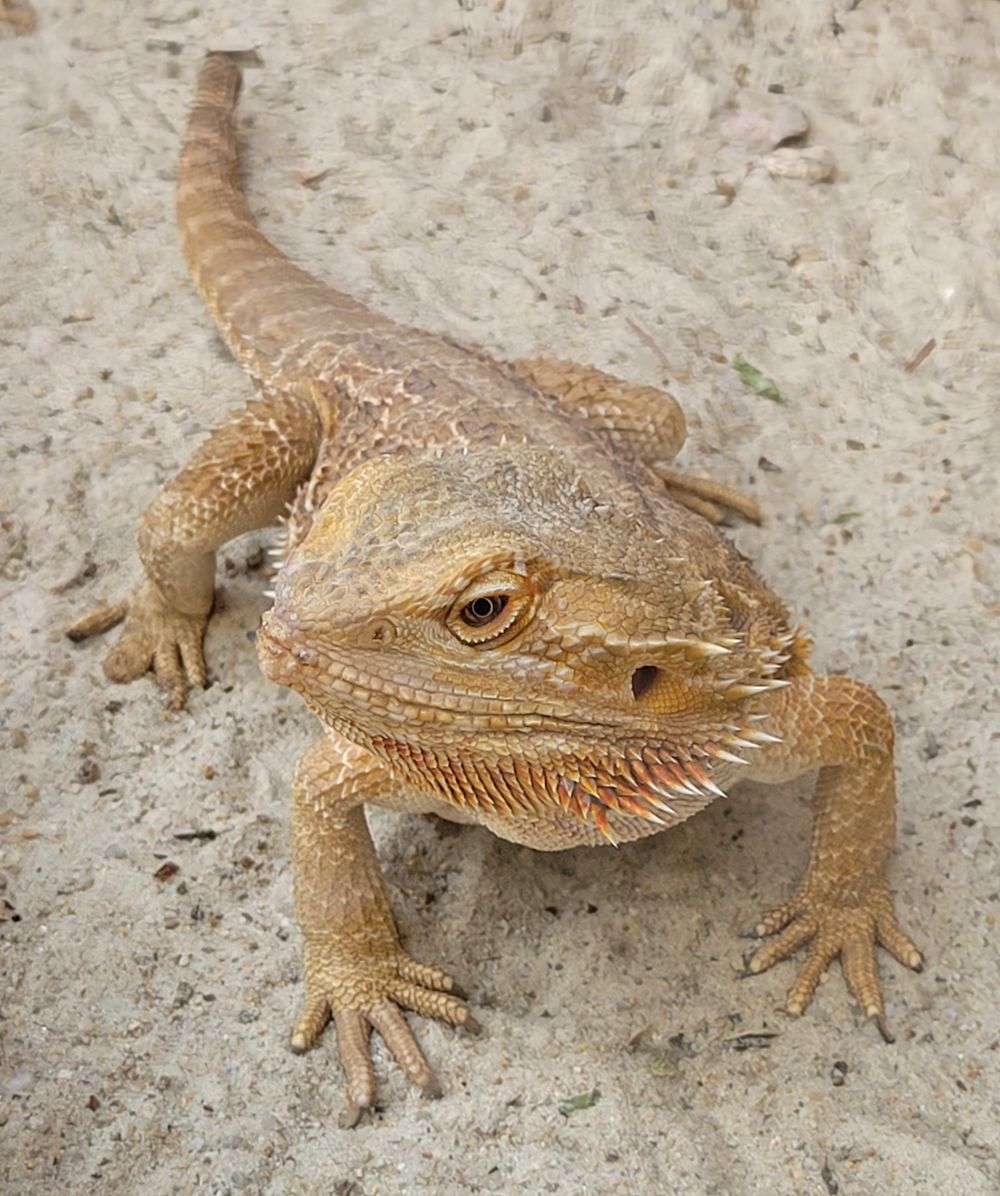
Sand and Sand/Soil Mixtures

RSPCA currently says that healthy adult bearded dragons can be kept on reptile-safe sand or a sand/soil mixture. It specifically prefers clean children's play sand over builders' sand because builders' sand may contain sharper particles.
Potential benefits
- supports digging and other species-typical substrate interaction;
- can be incorporated into a more naturalistic enclosure;
- offers varied texture and behavioral choice;
- can be used as a full floor or confined dig zone depending on the setup.
Potential problems
- ingestion risk rises if insects/greens are routinely eaten directly from the substrate;
- contaminated loose substrate requires proper spot-cleaning and periodic replacement;
- incorrect temperatures can impair digestion and compound GI problems;
- a sick dragon is harder to monitor on a complex loose floor;
- heavy enclosure furniture must be secured so digging cannot undermine it.
If you use loose substrate, the feeding strategy and thermal setup matter. Patify's bearded dragon heating and lighting guide explains how to verify the basking surface, cool zone and UVI rather than assuming a lamp wattage means digestion conditions are correct.
Tile, Slate and Other Solid Surfaces
RSPCA lists rough stone tiles or natural slate as acceptable non-loose surfaces. Their main advantage is cleaning and reduced accidental ingestion.
Advantages
- easy to spot-clean;
- no loose particles around food;
- can provide good traction when rough/textured rather than polished;
- stable under heavy rocks and hides;
- easy to inspect for feces and abnormal stool.
Limitations
- does not provide a full digging substrate;
- smooth tile can be slippery;
- heavy stone can add substantial enclosure weight;
- cold surfaces still require a correctly heated basking zone.
RSPCA's solution to the behavioral limitation is straightforward: if the main floor is slate/tile, provide a separate digging box filled with an appropriate sand/soil mixture.
A solid floor therefore does not have to mean “zero natural behavior.” It can be paired with a controlled enrichment zone.
Reptile Carpet / Artificial Turf
VCA permits artificial grass/turf manufactured for reptiles and recommends keeping a spare piece so one can be washed and dried while the other is in use.
However, carpet should not be treated as a no-maintenance compromise.
Potential advantages
- reusable;
- no sand-like loose particles;
- easy to remove as one piece.
Potential drawbacks
- requires thorough, frequent washing and complete drying;
- can trap fecal material/food debris in fibers;
- does not support digging;
- worn fibers or loops should be inspected for snag risk.
If a washable liner develops frayed fibers, odor, persistent staining, or cannot be disinfected reliably, replace it rather than keeping it because it is “reusable.”
Substrates to Avoid or Treat With Strong Caution
| Substrate | Why it is a poor choice |
|---|---|
| Calci-sand / calcium sand | RSPCA warns it can contribute to impaction in an incorrect environment; VCA advises avoiding even products marketed as digestible |
| Crushed walnut shell | RSPCA, VCA and PetMD flag it as an ingestion/obstruction concern |
| Corn cob granules | RSPCA/VCA advise against; large particulate can be swallowed and Merck notes corn cob also molds when wet |
| Gravel / small pebbles | VCA and PetMD warn of GI obstruction if swallowed; Merck generally discourages gravel for terrestrial reptiles |
| Wood chips / large bark pieces | RSPCA/PetMD identify ingestion risk; large particulates are poor around active insect feeding |
| Cat litter | VCA specifically advises against it |
| Cedar shavings | VCA calls cedar toxic to reptiles; Merck warns cedar/pine aromatic oils may cause respiratory/neurologic problems |
| Builders' sand | RSPCA prefers clean children's play sand because builders' sand can have sharper particles |
“Digestible” on a substrate bag is not a safety guarantee. A product can still create a physical blockage if enough is consumed or if gastrointestinal function is impaired.
What Actually Raises Impaction Risk?
Substrate type matters, but impaction is not solely a material problem. RSPCA specifically links calci-sand risk to an incorrect environment such as temperatures too low for good digestive function. Merck's broader reptile guidance likewise treats temperature, substrate, nutrition, hydration and husbandry as interconnected.
Risk can rise when:
- large indigestible particles are easy to swallow;
- the dragon catches feeders directly on loose substrate;
- basking/ambient temperatures are too low for normal digestion;
- the animal is dehydrated or systemically ill;
- the dragon deliberately eats substrate;
- husbandry or diet creates nutritional abnormalities;
- the substrate is contaminated or poorly maintained.
This does not mean that every impaction is caused by sand, nor that correct heat makes every loose substrate safe. The useful approach is to remove multiple preventable risk factors at the same time.
How Feeding Method Changes Substrate Risk
VCA says reptiles should not be fed directly on particulate bedding because prey/greens can bring substrate into the mouth. PetMD gives similar practical advice: if loose sand is used, feed in a separate dish or feeding area.
Lower-risk feeding options
- serve greens in a stable shallow dish;
- offer insects in a smooth-sided feeding bowl when appropriate;
- use a designated non-loose feeding zone;
- remove uneaten feeders rather than letting them burrow into substrate;
- do not scatter small insects through loose substrate simply for “hunting enrichment.”
Patify's bearded dragon food guide covers feeder rotation, gut-loading, greens and life-stage feeding separately.
How to Provide Digging Without a Full Loose-Substrate Floor
If you prefer paper or tile but still want behavioral enrichment, use a controlled dig box. RSPCA specifically recommends a sand/soil-filled box at the cool end when non-loose flooring is used.
Basic dig-box principles
- large enough for the dragon to enter and turn;
- deep enough to permit meaningful digging;
- stable so it cannot tip;
- positioned where it does not overheat;
- filled with appropriate clean substrate;
- spot-cleaned and replaced when contaminated;
- kept clear of unstable heavy rocks above it.
This hybrid approach separates two goals: easy-clean main flooring and access to digging behavior.
Cleaning and Replacement Comparison
| Substrate | Spot-cleaning | Full replacement / deep clean | Behavioral value |
|---|---|---|---|
| Paper | Very easy | Replace sheets whenever soiled; full floor replacement simple | Low for digging |
| Tile/slate | Easy | Wash/disinfect surface as needed | Low unless paired with dig box |
| Reptile carpet | Moderate | Remove, thoroughly wash and completely dry; keep spare | Low |
| Sand / sand-soil | Requires prompt waste removal | Contaminated substrate must be replaced; maintenance more involved | High for digging/natural interaction |
| Bioactive system | Specialized | Requires ecosystem-specific maintenance, not “never clean” | Potentially high when properly designed |
RSPCA encourages owners considering permanent naturalistic or bioactive systems to research them carefully through specialist husbandry resources. “Bioactive” should never mean putting dirt and cleanup insects into an enclosure and assuming sanitation is solved.
How to Switch Substrates Safely
Do not change substrate at the same time as five other husbandry variables if you want to understand how the dragon responds.
- Confirm heat and UVB first. Verify the existing basking surface, cool end and UVI.
- Record a baseline. Weight, appetite, stool, activity and current substrate behavior.
- Install the new floor safely. Stabilize rocks/hides so digging cannot undermine them.
- Keep food controlled. Use dishes/feeding zones rather than directly on loose substrate.
- Watch the dragon. Note deliberate substrate eating, abnormal stool, appetite changes or reduced basking.
- Spot-clean immediately. Do not allow feces and food to accumulate because the substrate looks “natural.”
For a complete enclosure check before changing the floor, use Patify's bearded dragon enclosure setup guide.
When Substrate Concerns Need a Reptile Veterinarian
Changing the floor is not a substitute for medical evaluation when a dragon shows possible gastrointestinal or systemic disease.
Contact an experienced reptile veterinarian if you notice:
- repeated deliberate substrate eating;
- progressive appetite loss;
- straining or persistent lack of stool with other signs;
- abdominal swelling/distension;
- vomiting/regurgitation;
- marked lethargy;
- weakness or abnormal gait;
- weight loss;
- known ingestion of large indigestible particles;
- blood in stool;
- possible foreign-body obstruction.
Move a sick reptile to a simple easy-monitoring setup when your veterinarian recommends it; Merck specifically notes the value of newspaper for observing feces and regurgitated material in sick reptiles.
Frequently Asked Questions
What is the best substrate for a bearded dragon?
It depends on the animal. Paper is the lowest-error choice for new, sick or unassessed dragons. RSPCA allows reptile-safe sand or sand/soil mixtures for healthy adults, while VCA prefers paper-based substrate and takes a more conservative stance on loose sand.
Is sand safe for bearded dragons?
Guidelines differ. RSPCA says appropriate reptile-safe sand can be used with healthy adults, while VCA advises against sand because of accidental ingestion and impaction risk. Feeding method, temperature, health status and substrate type all matter.
Is play sand safe for bearded dragons?
RSPCA specifically names clean children's play sand as preferable to builders' sand when a healthy adult is kept on sand. That recommendation does not make every sand setup appropriate for every dragon.
Is calci-sand safe?
It is not a recommended shortcut. RSPCA warns calci-sand can contribute to impaction when the environment is incorrect, and VCA advises avoiding even so-called digestible calcium sand.
Is tile good for bearded dragons?
Rough stone tile or natural slate can provide an easy-clean, non-loose surface. Avoid slick flooring and provide a separate dig box because solid floors do not permit normal digging.
Is reptile carpet good?
VCA lists reptile turf/carpet as an option, but it must be washed thoroughly and dried, with a spare piece available during cleaning. Inspect for damaged fibers and remember it does not provide digging behavior.
Should a baby bearded dragon be on sand?
A conservative approach is to keep a young/new dragon on an easy-clean non-loose substrate while health, feeding, temperatures and UVB are being established. This reduces variables during rapid growth.
Can substrate cause impaction?
Ingested substrate can contribute to gastrointestinal obstruction, particularly larger indigestible particles. Risk is influenced by particle type, amount swallowed, temperature, health, hydration and feeding practices.
Do bearded dragons need to dig?
Digging is a natural behavior. If you use paper, tile or another solid floor, RSPCA recommends providing a suitable sand/soil digging box.
Bottom Line: Match the Floor to the Dragon, Not to a Forum Team
The most useful substrate plan is:
- paper for quarantine, illness and uncertain health;
- easy-clean solid flooring when sanitation is the priority;
- a dig box when solid flooring limits natural behavior;
- carefully managed reptile-safe sand/sand-soil only when the adult dragon and husbandry are appropriate;
- avoid calci-sand, crushed walnut, corn cob, gravel and other high-risk particulates;
- keep feeding controlled and off risky loose substrate;
- review heat, UVB, hydration and health—not only the floor—when impaction is a concern.
A substrate cannot make bad husbandry safe, and a simple floor is not a failure of enrichment if the enclosure still provides climbing, hiding, basking and an appropriate digging opportunity.