
Last updated: September 24, 2026
Quick answer: the best leopard gecko substrate depends on the gecko's health and how mature the rest of the husbandry system is. For a new, sick, underweight, recently treated, or otherwise unassessed gecko, paper towel or another simple non-loose surface is the lowest-error choice because stool, appetite, regurgitation and shedding problems are easier to monitor. For a healthy established adult, naturalistic soil-sand mixes can be appropriate when heat, hydration, feeding and sanitation are correct. RSPCA accepts an approximately 50% organic soil / 50% clean sand mix; ReptiFiles uses a more structured 60% topsoil / 30% sand / 10% clay formula. PetMD remains more conservative about loose substrate, which is why this page treats substrate as a risk-management decision, not a fandom argument.
Best decision rule: choose the floor that gives the gecko reliable traction, safe feeding, cleanability and appropriate natural behavior for its current health status. A naturalistic substrate is not a reward for advanced keepers, and paper is not a failure—each solves a different husbandry problem.
The Leopard Gecko Substrate Decision Matrix
| Situation | Best starting direction | Why |
|---|---|---|
| Newly acquired gecko | Paper towel / paper | Easy stool, appetite, shedding and parasite monitoring |
| Sick, underweight, diarrhea, regurgitation, wound care | Paper towel / paper | Sanitation and clinical observation take priority |
| Young gecko while setup is still being calibrated | Simple non-loose surface | Fewer variables while heat, feeding and supplements are stabilized |
| Healthy adult, stable heat and hydration | Appropriate naturalistic soil-sand mix can be considered | Supports digging and a more natural terrestrial substrate |
| Healthy adult, keeper prioritizes easy cleaning | Rough slate/stone or clay-style floor + humid hide/dig opportunity | Low ingestion risk and easy spot-cleaning |
| Gecko repeatedly eats substrate | Return to non-loose floor while cause is investigated | Reduces exposure while nutrition, heat, hydration and health are reviewed |
| First bioactive project | Only after quarantine and husbandry are stable | Bioactive adds maintenance complexity and can hide problems if poorly managed |
This topic was marked for expert review in Patify's planning inventory, so this article does not present any one substrate as universally veterinarian-approved.
Why Reputable Sources Disagree About Loose Substrate
| Source | Current position | What that means |
|---|---|---|
| RSPCA | Healthy adults in a well-set enclosure can use about 50% organic soil + 50% clean children's play sand or reptile sand | Naturalistic approach with health/husbandry prerequisites |
| PetMD | Loose substrate can be accidentally swallowed and cause obstruction; if used, feed in a dish or feeding tank | More conservative, ingestion-focused risk management |
| ReptiFiles | Prefers naturalistic substrate for healthy geckos; recommends 60% organic topsoil + 30% sand + 10% excavator/bentonite clay | Behavior/habitat-focused approach with quarantine first |
The disagreement is not a reason to ignore the sources. It tells us that substrate cannot be judged separately from the animal's health, the enclosure temperature, hydration, feeder size, feeding location and keeper maintenance.
Common ground: sick or compromised animals are easier to manage on simple flooring; hazardous particulates should be avoided; food should not be scattered into risky loose substrate; and a gecko showing obstruction signs needs veterinary care rather than a substrate debate.
Paper Towel and Paper: Best for Monitoring
Paper towel is the easiest substrate to understand because its purpose is clinical visibility, not naturalism.
Advantages
- cheap and easy to replace;
- lets you inspect feces and urates clearly;
- makes diarrhea, blood or abnormal stool easier to notice;
- no loose particles around feeders;
- excellent during quarantine, treatment or recovery.
Limitations
- minimal digging opportunity;
- can become slippery or wet when soiled;
- less visual/behavioral complexity;
- some geckos may shred it while attempting to dig.
ReptiFiles specifically describes paper towels as useful in quarantine and for geckos where impaction risk is a concern. A simple floor is especially useful during the first weeks after acquisition because you can establish a baseline for appetite and stool.
Slate, Stone and Clay-Style Solid Floors
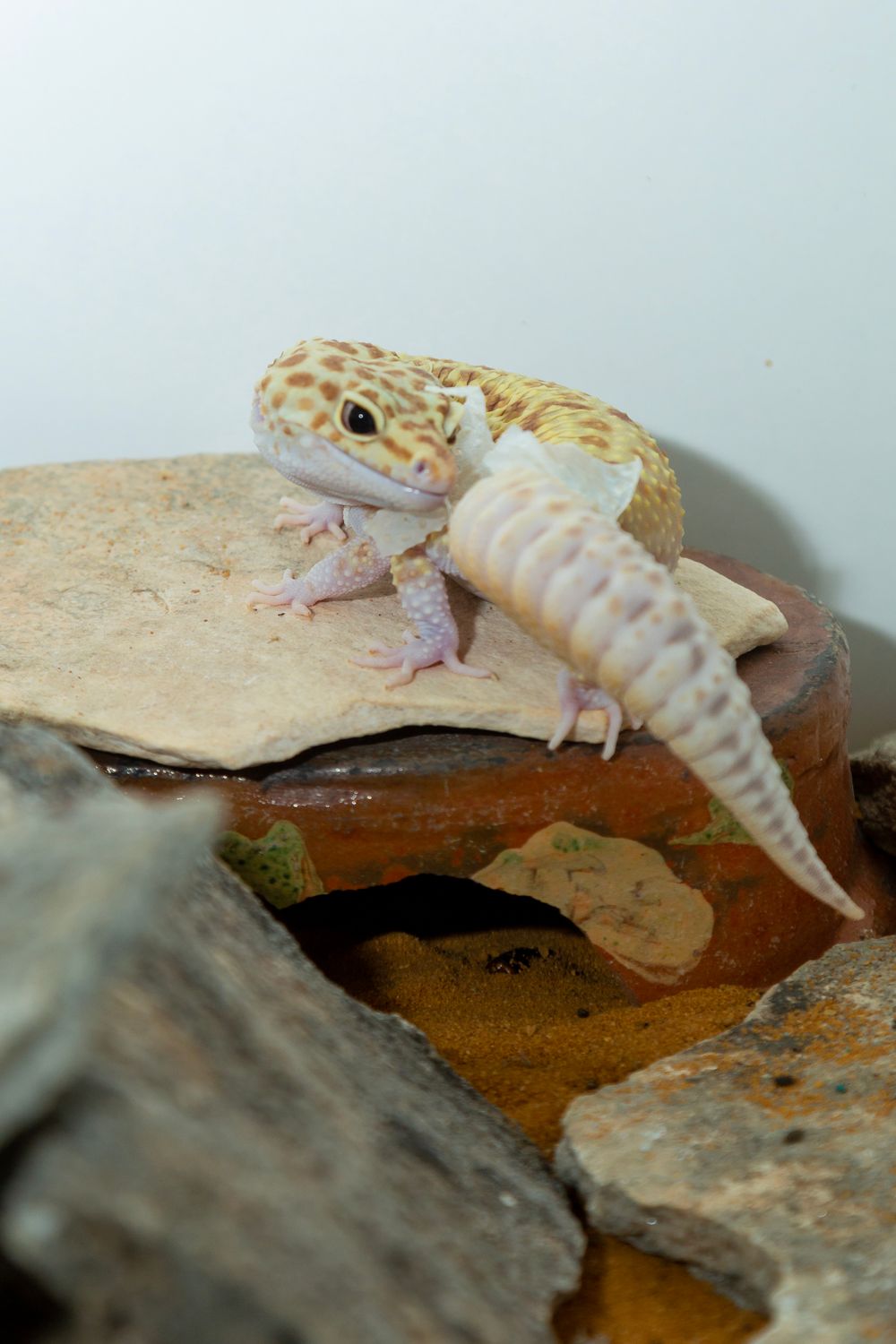
Rough slate or stone-style surfaces offer a middle ground between disposable paper and loose naturalistic substrate.
Advantages
- very low accidental substrate ingestion;
- good visual monitoring of stool;
- holds warmth well;
- provides a firm feeding area;
- can help create varied texture and low levels.
Limitations
- does not permit meaningful digging;
- polished tile can be too slick;
- heavy stone increases enclosure weight;
- grout/crevices can complicate cleaning if installed poorly.
ReptiFiles also lists dried excavator-clay-style substrate as an option because it can create naturalistic contours while hardening into a non-loose surface, though it is less convenient to deep-clean.
Topsoil + Sand Mixes: The Naturalistic Option
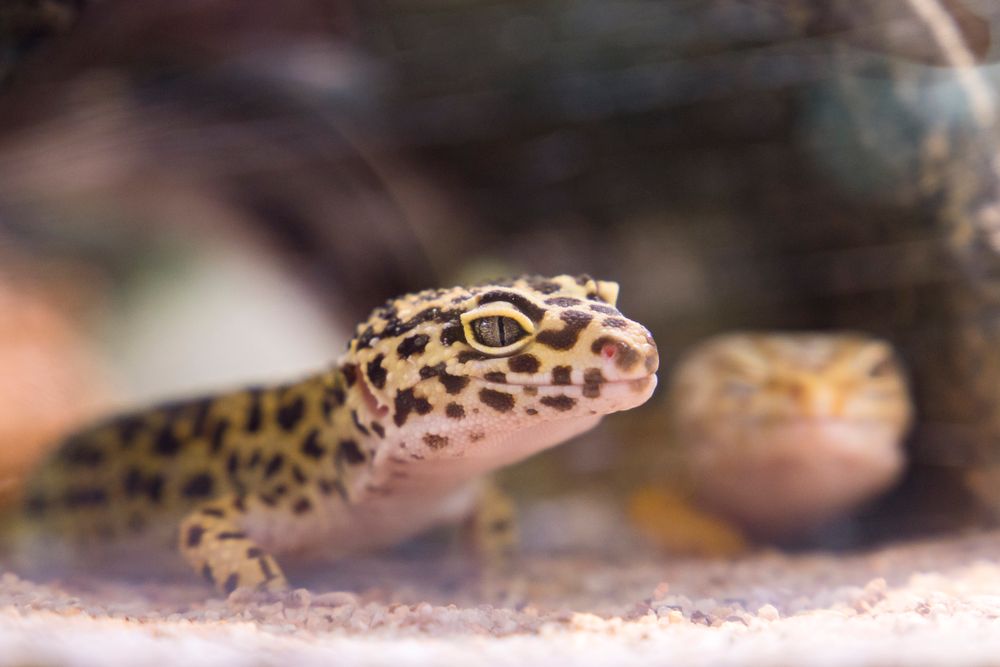
There is no single universally accepted recipe.
| Formula | Source | Design intent |
|---|---|---|
| 50% organic soil + 50% suitable sand | RSPCA | Simple healthy-adult naturalistic floor |
| 60% organic topsoil + 30% sand + 10% excavator/bentonite clay | ReptiFiles | More structured semi-arid mix that packs and supports digging |
Topsoil selection
Use plain organic topsoil without fertilizer pellets, pesticides, herbicides, manure additives, wetting crystals or perlite. “Organic” on the bag does not automatically mean reptile-safe; inspect the ingredient label.
Sand selection
RSPCA specifies clean children's play sand or reptile sand and says not to use builder's sand because it can be sharp. Avoid calcium/vitamin sand products.
Depth and packing
ReptiFiles recommends around 4 in / 10 cm for meaningful burrowing and advises moistening/mixing/packing the substrate, then letting it dry fully before introducing the gecko. The exact depth is an enrichment choice rather than an RSPCA requirement.
When not to use it yet
- before quarantine is complete;
- during unexplained diarrhea or weight loss;
- if temperatures are still unstable;
- if the gecko persistently eats substrate;
- if you cannot keep contaminated areas clean.
Bioactive Leopard Gecko Substrate
A bioactive enclosure combines substrate, microorganisms/clean-up crew, organic matter and often live plants. It is not simply “soil plus springtails.”
Potential benefits
- naturalistic digging and exploration;
- soil structure and microhabitats;
- some waste processing by the clean-up crew;
- more complex environmental enrichment.
Why beginners should be cautious
- the system needs time to establish;
- humidity can drift too high if substrate is managed like a tropical bioactive tank;
- plants/clean-up crew can fail;
- feces still require monitoring;
- a visually “alive” enclosure can make it harder to notice subtle health changes.
ReptiFiles describes bioactive as valuable but generally not its first recommendation for brand-new keepers. Quarantine and husbandry stability should come first.
Bioactive does not mean maintenance-free. You still monitor stool, remove problematic waste, manage moisture, inspect the clean-up crew and verify heat/humidity.
Reptile Carpet and Reusable Liners
PetMD still lists reptile carpet as a possible enclosure liner, while some modern husbandry sources are less enthusiastic because reusable fiber surfaces can trap debris and wear over time.
If you use a reusable liner
- keep a second clean liner ready;
- wash and dry it thoroughly;
- replace it when frayed or damaged;
- inspect toes and claws for snagging;
- do not assume reusable means lower-maintenance.
For quarantine, disposable paper usually provides the same monitoring benefit with less cleaning complexity.
Substrates to Avoid or Treat With Strong Caution
| Material | Why it is a poor choice |
|---|---|
| Calcium / vitamin sand | Can be intentionally or accidentally ingested; ReptiFiles specifically advises against calcium-carbonate sands |
| Ground walnut shell | PetMD and ReptiFiles both advise against it; hard particulate is inappropriate if swallowed |
| Gravel / small stones | PetMD advises against gravel; swallowable pieces create obstruction risk |
| Wood chips / shavings | PetMD advises against wood chips; coarse pieces are unsuitable for an insect-hunting terrestrial gecko |
| Builder's sand | RSPCA says not to use it because particles may be sharp |
| Pure coconut fiber as the whole floor | ReptiFiles does not recommend it alone for this arid/semi-arid species; it is better treated as an ingredient only in carefully designed mixes |
| Dusty fine sand | High dust can irritate eyes and respiratory surfaces |
What Actually Changes Impaction Risk?
This is where internet advice becomes polarized. RSPCA acknowledges that healthy geckos can pass small amounts of soil/sand ingested while feeding, while PetMD warns that accidentally swallowed loose substrate can produce gastrointestinal obstruction.
The practical conclusion is not “sand can never cause a problem” and not “one grain of sand causes impaction.” Risk depends on context.
Risk rises when:
- the gecko is sick or dehydrated;
- temperatures are too low for normal digestion;
- large or inappropriate particles are swallowed;
- feeders are routinely hunted directly through loose substrate;
- the animal deliberately eats substrate;
- parasites or other GI disease are present;
- prey itself is oversized.
RSPCA explicitly treats impaction as a potential sign of deeper husbandry problems such as incorrect temperatures, dehydration or vitamin deficiencies. ReptiFiles makes an even stronger husbandry-centered argument. PetMD remains more cautious about loose substrate itself. This page preserves that disagreement instead of converting it into a fake consensus.
Feeding Method Changes Substrate Risk
PetMD recommends feeding from a shallow dish or separate feeding area when loose substrate is used. That is an easy risk reduction regardless of which husbandry camp you follow.
Lower-risk feeding setup
- use an escape-resistant feeder/worm dish when practical;
- offer loose insects over a slate/stone feeding zone;
- remove uneaten insects;
- do not scatter small feeders deliberately into loose substrate;
- avoid oversized prey.
Patify's leopard gecko tank setup guide covers the warm–cool–humid hide layout, heat and UVB conditions that should already be stable before moving to a more complex substrate.
Cleaning and Maintenance Comparison
| Substrate | Spot-cleaning | Deep maintenance | Digging value | Best use |
|---|---|---|---|---|
| Paper towel | Very easy | Replace whenever soiled | Low | Quarantine / medical monitoring |
| Slate / textured stone | Easy | Wash/disinfect removable pieces | Low | Easy-clean permanent floor |
| Excavator-clay-style floor | Moderate | Harder to remove/replace | Low–moderate depending design | Naturalistic hardscape |
| Soil-sand mix | Scoop contaminated areas promptly | Periodic partial/full replacement | High | Healthy established adult |
| Bioactive | Still monitor/remove problem waste | Ecosystem maintenance rather than simple dump-and-replace | High | Experienced keeper / stable system |
Naturalistic substrate is more work than a marketing photo suggests. You still remove feces/urates, inspect damp areas, prevent mold, replace contaminated sections and monitor whether the floor is becoming excessively humid or dusty.
How to Switch a Leopard Gecko to a New Substrate
- Finish quarantine first. Know the gecko's baseline appetite, stool and weight.
- Verify temperatures. Changing floor material can change surface temperatures.
- Prepare substrate completely. Naturalistic mixes should be clean, well mixed and dry/stable before move-in.
- Support heavy hardscape from below. Do not let rocks sit on loose soil where digging can undermine them.
- Keep a solid feeding zone. Make the first feeding sessions easy to observe.
- Track behavior and stool. Watch for deliberate substrate eating, reduced appetite, abnormal stool or unusual lethargy.
Change one major variable at a time. If you replace the substrate, heater, UVB and diet simultaneously, you lose the ability to identify which change created a problem.
When Substrate Concerns Need a Reptile Veterinarian
Do not treat possible obstruction by switching substrates and waiting indefinitely.
Seek reptile-veterinary care if you notice:
- persistent appetite loss;
- progressive weight loss;
- marked lethargy;
- abdominal bloating/distension;
- repeated straining or abnormal stool pattern;
- known ingestion of a large foreign object;
- vomiting/regurgitation;
- weakness or major behavioral change.
If eye irritation, retained shed or eyelid swelling is part of the problem, use Patify's leopard gecko swollen-eye guide; dusty substrate is only one possible irritant, and eye disease should not be diagnosed from the floor material alone.
Frequently Asked Questions
What is the best substrate for a leopard gecko?
There is no single best floor for every situation. Paper towel is best for quarantine and health monitoring; textured stone/slate is easy to clean; healthy established adults can use an appropriate naturalistic soil-sand mix when husbandry is stable.
Can leopard geckos live on sand?
Guidance differs. RSPCA permits suitable sand as part of a soil/sand mix for healthy adults, while PetMD is more conservative about accidental ingestion. Pure dusty or calcium sand is not a good default.
What topsoil is safe for leopard geckos?
Use plain organic topsoil with no fertilizer pellets, pesticides, herbicides, manure additives, moisture crystals or perlite. Read the actual ingredient label rather than relying only on the word “organic.”
What is a good soil-to-sand ratio?
RSPCA uses about 50/50 organic soil and suitable sand. ReptiFiles uses a 60/30/10 topsoil/sand/clay formula. These are husbandry frameworks, not a universal veterinary recipe.
Is paper towel safe?
Yes, especially for quarantine, illness, new geckos and situations where stool or appetite must be monitored closely. It provides little digging enrichment, so it is a management substrate rather than a naturalistic one.
Is reptile carpet good for leopard geckos?
PetMD lists reptile carpet as an option, but reusable fiber liners require thorough cleaning, complete drying and inspection for wear. Paper is usually simpler for quarantine.
Is calcium sand safe?
It is not a recommended default. ReptiFiles specifically advises against calcium/vitamin sand, and RSPCA advises against calcisand.
Can substrate cause impaction?
Swallowed substrate can contribute to obstruction, but risk depends on particle type, amount, temperature, hydration, illness, parasites and feeding method. A symptomatic gecko needs veterinary assessment.
Is bioactive better?
Not automatically. It can provide excellent naturalistic behavior opportunities, but it is more complex and should be built after quarantine and core husbandry are stable.
Bottom Line: Match the Floor to the Gecko's Current Risk Profile
A practical substrate sequence is:
- paper during quarantine, illness or uncertainty;
- textured solid flooring when cleanability is the main priority;
- soil-sand naturalistic substrate only after health and husbandry are stable;
- bioactive only when you can manage the ecosystem rather than merely decorate it;
- controlled feeding and correct heat regardless of floor type.
The substrate should support the animal, not define your identity as a keeper. If the gecko is healthy, temperatures are correct, feeding is controlled and the floor is maintained properly, you have more than one defensible option.