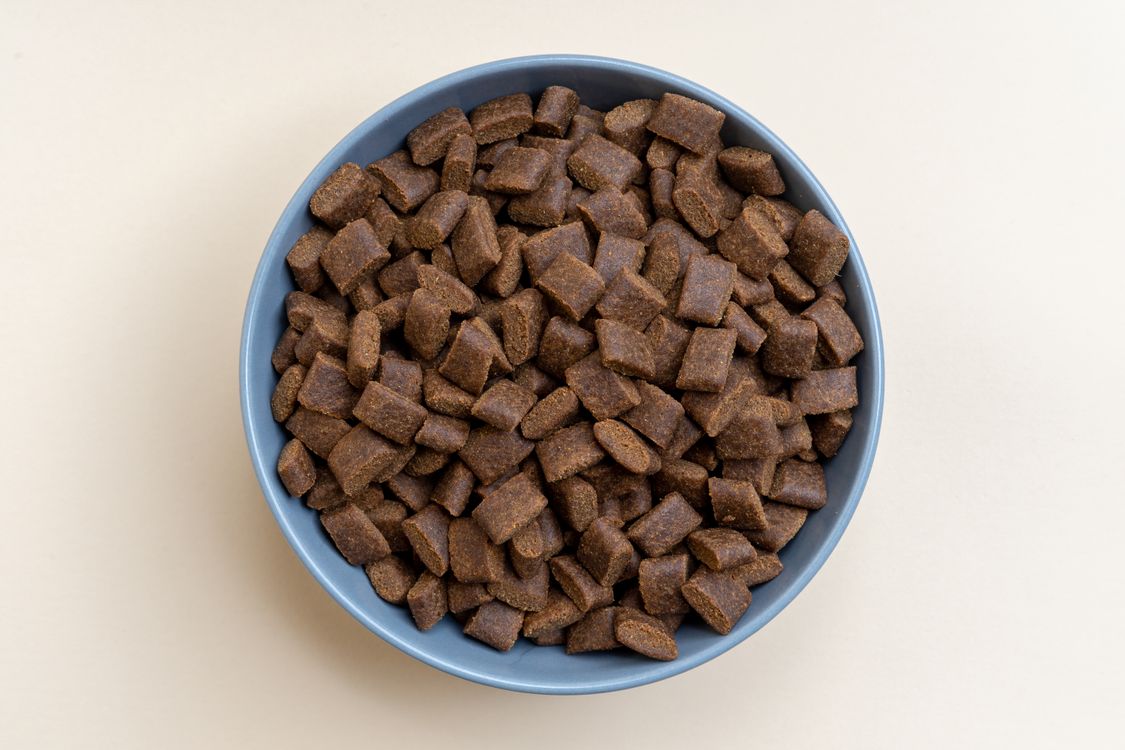

Best Dog Food for Skin Allergies: Choose the Right Diet Before You Switch
Understanding food versus environmental allergies, comparing therapeutic diet types, and running a meaningful veterinarian-guided feeding trial.
Clinical review status: Research-based editorial guide; not yet reviewed by a veterinarian. A diet trial, medication change, or food challenge belongs in a veterinarian-directed plan.
An itchy dog does not automatically need a new food. Itching, paw chewing, recurring ear inflammation and belly rashes may involve fleas, environmental allergies, infections, parasites, food reactions, or more than one cause at once. The best dog food for skin allergies is therefore not one universal bag. It is the food that fits a carefully defined problem: an appropriate complete diet for everyday feeding when no food allergy has been established, or a controlled veterinary elimination diet when food allergy genuinely needs investigating.
Quick answer: If a veterinarian suspects food allergy, ask about a veterinary therapeutic hydrolyzed or carefully chosen novel-protein diet, and plan an adequately long, strictly controlled feeding trial followed by a veterinarian-supervised challenge. Do not assume a supermarket “sensitive skin,” “grain-free,” “salmon,” or “limited ingredient” food is a diagnostic test. If the dog has swollen facial tissues, difficulty breathing, profound lethargy, severe skin wounds, or other acute systemic signs, obtain urgent veterinary care rather than trying another food.
First, identify which question you actually need to answer
“Best food” searches mix together three separate intentions. Some owners have a dog that scratches after every spring walk and want less redness. Others have had several ear infections and suspect a protein reaction. A third group already has a veterinary diagnosis and needs a sustainable long-term diet. These situations are not interchangeable, so a list of popular bags alone cannot answer all three.
Before spending money, write down the age at which symptoms began, whether they change with the season, whether fleas have been consistently controlled, the location of lesions, prior ear or skin infections, and everything the dog eats. The list includes treats, chews, supplements, table scraps, flavored medications and edible preventives. A single overlooked snack can undermine a controlled feeding trial.
A clinician may recommend skin cytology, parasite assessment, infection treatment, flea prevention or a broader dermatologic workup before assigning the problem to food. That is not a delay in solving the problem: it is how you avoid attributing temporary improvement from infection treatment to a new diet. The American Animal Hospital Association describes food elimination testing as one part of a comprehensive allergy evaluation, not the entire evaluation.
| What you notice | Possible explanations | Best next action |
|---|---|---|
| Seasonal paw licking after outdoor exposure | Environmental allergy, irritation or concurrent infection | Document seasonality; discuss dermatology assessment |
| Repeated ear inflammation year-round | Food reaction, environmental allergy, recurrent microbial disease | Ask for ear evaluation and an integrated diagnostic plan |
| Sudden intense itching with fleas or flea dirt | Flea-associated dermatitis is possible | Confirm appropriate parasite control with the veterinarian |
| Vomiting or diarrhea alongside chronic itching | Food reaction is one possibility among several | Review both skin and gastrointestinal history |
| Swelling of the face or trouble breathing | Acute reaction or another emergency | Seek immediate veterinary care |
How often is food actually the problem?
Food can contribute to allergic skin disease, but an itchy coat does not prove a food allergy. Environmental triggers, fleas, skin-barrier problems and secondary infections are common alternative or additional explanations. Some dogs have both dietary and environmental allergies; treating only the food component may leave significant itching behind.
No symptom checklist can accurately pinpoint chicken, beef or grain as the culprit. Even a pattern that seems convincing—itching after a treat, for instance—can overlap with outdoor exposures, flea control changes or infection therapy. The practical objective is not to guess an allergen on day one. It is to establish a baseline, choose a defensible test, keep the test controlled and interpret the result cautiously.
Merck Veterinary Manual emphasizes that improvement on a restricted diet alone does not prove food allergy. The response needs to be confirmed by a controlled dietary challenge, because timing and concurrent treatment can create misleading impressions. If itching persists despite a good trial, the dog may have a different condition, a second allergy, or an improperly executed trial.
Three diet categories that shoppers routinely confuse
A food marketed for “skin and coat” generally aims to provide nutrition for skin health; it may still contain the protein to which a particular dog reacts. An over-the-counter limited-ingredient food reduces the number of prominently advertised ingredients, but the term by itself does not prove manufacturing controls against unintended ingredients. Veterinary diagnostic diets are formulated and managed for a different purpose: controlled assessment of suspected food reactions.
| Category | Intended role | What the label does not establish | When to discuss it |
|---|---|---|---|
| Sensitive skin or salmon maintenance diet | Complete everyday feeding if suitable for life stage | Food allergy diagnosis or protein exclusion | Nutrition or skin support, absent diagnostic trial |
| Retail limited-ingredient diet | Simpler declared recipe for selected everyday use | Absence of undeclared trace proteins; diagnostic reliability | Routine selection with known ingredient preferences |
| Veterinary hydrolyzed diet | Elimination trial or management under clinical direction | Universal absence of reactions in every dog | Suspected food allergy needing controlled evaluation |
| Veterinary novel-protein diet | Controlled testing using a truly unfamiliar protein | Novelty without a reliable lifelong food history | When prior exposures are documented and clinician agrees |
| Elemental or amino-acid diet | Specialized diagnostic nutrition | Necessity for every itchy dog | Complex or difficult-to-control cases |
The critical difference is not whether the packaging looks “clean.” It is whether the entire formulation, the dog's exposure history, the manufacturing process, and the feeding protocol match the clinical question. Tufts Petfoodology specifically warns that a diet trial should use the right therapeutic food rather than repeatedly switching among retail options that may produce inconclusive results.
Hydrolyzed protein: what that technical word really means
Hydrolysis breaks proteins into smaller fragments. The goal is to reduce the chance that the dog's immune system recognizes the original dietary proteins. This is a formulation strategy, not a guarantee: the degree of hydrolysis varies, a dog may still react in some situations, and the overall diet needs to meet the patient's nutritional requirements.
Owners often see the word soy or chicken on the bag and assume the product cannot be designed for food allergy. That conclusion is too simple. Royal Canin's U.S. Canine Hydrolyzed Protein HP is built around hydrolyzed soy protein; Purina Pro Plan Veterinary Diets HA Hydrolyzed Vegetarian lists hydrolyzed soy protein isolate along with corn starch and corn oil. The presence of these ingredients matters for personal history, but hydrolyzed-protein nutrition and retail foods containing intact versions of the same sources do not function identically.
A veterinarian may recommend one hydrolyzed formulation over another because of the dog's age, previous exposures, concurrent gastrointestinal disease, other health conditions or experience with a prior food trial. Do not assume that every prescription food labeled “hypoallergenic” has interchangeable fat, calorie, mineral or life-stage profiles. Ask for the exact U.S. formulation and full nutritional adequacy statement before buying.
Novel protein: unfamiliar to this dog, not exotic to a website
A novel-protein trial uses an intact protein the dog has not previously eaten. Venison, rabbit, duck or fish may be novel for some dogs, but none is inherently novel for every dog. A rescue with an unknown feeding history or a dog that has eaten dozens of treats may be a poor candidate for a novelty-based trial because no one can establish which proteins are genuinely unfamiliar.
Novel protein also does not mean allergy-proof. A dog could react to the protein chosen, encounter a previously fed ingredient elsewhere in the formula or consume an undeclared protein through a treat or cross-contact. This is why the dog’s actual history and the manufacturer's controlled production processes matter more than exotic imagery on the package.
For complex medical cases, a veterinarian might choose extensively hydrolyzed or elemental nutrition instead. Tufts identifies incomplete dietary history as a major reason to consider those approaches. If a novel protein is chosen, the same strict feeding rules and follow-up challenge still apply.
Real U.S. therapeutic products: compare the evidence, not the hype
These examples illustrate distinct label features, not a Patify ranking, lab test, or individual prescription. Availability, formula composition and feeding suitability should be checked on the exact current U.S. package with the veterinarian.
| U.S. product | Manufacturer-described strategy | Ingredient or label detail worth noticing | Key limitation |
|---|---|---|---|
| Royal Canin Veterinary Diet Hydrolyzed Protein HP dry | Hydrolyzed protein for dermatological and gastrointestinal support | Hydrolyzed soy protein; manufacturer describes complete and balanced adult dog food | Adult formulation; confirm patient suitability and prescription |
| Purina Pro Plan Veterinary Diets HA Hydrolyzed Vegetarian dry | Single hydrolyzed protein source with a single carbohydrate source | Corn starch, hydrolyzed soy protein isolate and corn oil listed | Ingredient names alone cannot determine individual tolerance |
| Hill's Prescription Diet z/d | Hydrolyzed-protein diet intended for adverse food reactions | Verify the particular U.S. wet/dry label and life-stage statement | Do not substitute other Hill's skin products merely by brand |
For exact formulation updates, consult Royal Canin U.S. Hydrolyzed Protein HP, Purina U.S. HA Hydrolyzed Vegetarian, and the corresponding manufacturer's official U.S. listing for the exact Hill's z/d format your veterinarian proposes. We deliberately do not invent manufacturer comparisons for fat, protein or calories where the comparable current analyses were not independently confirmed.
When researching “best dog food for skin allergies,” it is tempting to call one of these the winner. The safer, more actionable comparison is whether a specific diet fits the patient's dietary history and the veterinarian's elimination plan. A less expensive retail food is not a substitute for the diagnostic certainty you need when the goal is to confirm food allergy.
Build a useful ingredient exposure history before buying anything
Make three columns: the main foods consumed in the past, the extras consumed occasionally, and the unknowns. Include products from the past several months, not just the current bag. Chicken in kibble, beef in dental chews, a flavored monthly preventative, chicken broth on a sick day and peanut-butter treats should all be considered. If you cannot remember an ingredient, record uncertainty rather than inventing an answer.
Photographs of complete ingredient panels help far more than brand names. The same product line may have a different recipe in wet, dry, adult or puppy versions. A protein listed near the end of an ingredient list is still an exposure. Also check whether the manufacturer's nutritional adequacy statement matches the dog's life stage; growing puppies, pregnant dogs and medically complex adults cannot automatically use the same trial diet.
Do not assume grain-free, corn-free, chicken-free or fish-first formulas are hypoallergenic. A grain-free diet guide can explain carbohydrate substitutions, while our limited-ingredient guide discusses retail labeling. Neither replaces the clinical diagnostic process described in this article.
How an eight-to-twelve-week elimination trial works
VCA Animal Hospitals describes a strict food trial lasting approximately 8–12 weeks for dogs with suspected skin-related food allergy. Merck and Tufts also emphasize adequate duration and rigid control of everything the dog consumes. Treat the following as a discussion framework, not a home prescription: the veterinarian chooses the diet and timing, provides a transition plan when needed, and determines how concurrent treatments affect interpretation.
Before day one: Confirm the exact chosen product, life-stage appropriateness, sufficient calories, allowed treats or none, flavored medication alternatives, and the plan for household members. Ask what to do if the dog refuses food, vomits repeatedly, loses weight, or develops a new skin infection. Set a recheck date rather than counting solely on memory.
During weeks one and two: Keep meals consistent and start an itch, ear, stool and accidental-exposure log. Improvement is not guaranteed early; worsening signs need clinical attention rather than automatic food experimentation. Do not discontinue prescribed medicines just to obtain a “clean” test without a veterinarian's instructions.
During the middle weeks: Record visible signs in the same manner each week, ideally with photographs taken under similar lighting. Scratching frequency is hard to estimate; simple daily scales can show whether signs are clearly shifting. Note flea prevention, grooming, infections and medications because these can alter the appearance of progress independently of food.
At the scheduled endpoint: Review the results with the clinician. A clear improvement may support proceeding to a controlled dietary challenge. Partial improvement can signal concurrent environmental allergy or infection. Little or no improvement warrants a review of the chosen diet, hidden exposures, adherence and alternative diagnoses—not a claim that all foods have been eliminated as possible factors.
Challenge step: The veterinarian decides how and when to reintroduce a previous food or individual ingredients. A flare on controlled re-exposure after improvement helps confirm a food reaction. Do not deliberately provoke a reaction in a dog with a history of severe systemic reactions without specialist guidance.
The hidden-exposure checklist that saves the trial
The most frustrating failed trial is one that seemed strict but included small, repeated exceptions. Check every person who feeds the dog; visitors who slip treats under the table; other pets' bowls; training sessions; edible chews; pill pockets; flavored toothpaste; vitamin supplements; and orally administered flavored medications or parasite preventives. If an essential medicine contains a flavoring, the veterinarian should help decide whether and how to handle it—never stop a necessary medication on your own.
Keep the bag or package available and mark the first and last planned feeding dates. Use the assigned food as training rewards only if the veterinarian approves; this avoids introducing new ingredients. Ask about pet sitters and boarding facilities well before any planned travel. Keep food separated in households with multiple animals and consider whether a curious dog can access dropped crumbs or food scraps in the yard.
If a mistake happens, record the date, exact product and estimated amount. A mistake is useful information, not an invitation to hide the event. The clinician may decide whether the trial needs adjustment or an extended observation window. Keeping the log accurate gives the result value even when the trial is not perfectly executed.
What to monitor: four domains rather than “itchy or not”
For skin, record itching intensity on the same simple 0–10 scale daily, and photograph areas of redness or hair loss weekly. For ears, note head shaking, odor, visible discharge and whether the dog resists touch; recurrent ear disease deserves an actual ear examination, not just a food change. For gastrointestinal signs, track stool consistency, vomiting and appetite. For daily function, note sleep interruption, playfulness and whether the dog seems more comfortable.
The objective is not to produce an artificial medical score that replaces a veterinary examination. Consistent observations help the clinician understand whether a change corresponds to diet, infection treatment, flea control or seasonal exposure. Severe symptoms or rapidly worsening skin warrant medical review before any planned recheck date.
| Observation | Simple record | Why it helps |
|---|---|---|
| Itch and paw licking | Same 0–10 rating each evening | Tracks trend rather than best/worst remembered day |
| Ears and skin | Redness, discharge, odor, lesion photos | Shows possible secondary disease |
| Stool and appetite | Consistency, vomiting, portion actually consumed | Catches problems beyond the skin |
| Other treatments | Bath, flea control, antibiotics, allergy drugs | Prevents false credit to the diet |
| Unplanned exposures | Treat, medication flavor, other-pet food, date | Protects interpretation of the trial |
What if the food seems to work?
When the skin improves during an elimination diet, celebrate the dog's comfort but do not prematurely label a specific food as the allergen. The dog may have benefited from the diet, concurrent skin treatment, better parasite control or changes in the environment. Merck explicitly states that a food allergy diagnosis requires both improvement during exclusion and relapse with a controlled challenge.
If the challenge is positive, ask which long-term complete diet is sustainable, appropriate for the dog's age and medical conditions, and reliably avoids confirmed triggers. Some dogs may stay on an appropriate veterinary diet; others may transition under guidance to a different balanced formula after the culprit is identified. The best long-term diet is not necessarily the most expensive diagnostic diet forever.
If the challenge is negative, the original improvement could have been coincidental or driven by another intervention. That result is still informative: it reduces the justification for permanently eliminating wide groups of ingredients. Avoid stacking increasingly restrictive diets on a dog without a demonstrated benefit.
What if nothing changes after eight to twelve weeks?
Before saying “diet doesn't matter,” check whether the regimen really was exclusive, whether the chosen protein was previously eaten, whether the dog ate unknown treats, and whether the diet was suitable for diagnosis rather than retail maintenance. Then review whether flea infestation, environmental atopy, bacterial infection, yeast dermatitis, mites, contact irritation or other disorders were evaluated. A dermatologist may recommend additional testing or a differently structured trial.
For dogs that have already undergone multiple uncontrolled food changes, an accurate exposure timeline is especially valuable. Bring package photographs and a dated list of trials to the appointment. Avoid repeating week after week of vague changes that produce neither a reliable diagnosis nor a stable routine.
Do not interpret a lack of response as permission to stop medically necessary parasite prevention or to intensify over-the-counter supplements. Food supplements marketed for skin health may support certain nutritional needs but they are not diagnostic instruments, and some add extra ingredients that undermine a planned trial.
Should you choose salmon, lamb, duck, insect protein or grain-free?
These choices should follow the clinical question. Salmon-based everyday foods may supply certain fatty acids, but they do not prove that salmon will be tolerated by an individual with suspected food allergy. Lamb is no longer unfamiliar to many dogs, and duck or venison can be previously consumed through treats. Insect-protein formulas may be relevant to a particular diet history, yet “alternative protein” does not establish validated hypoallergenic performance for a specific dog.
Likewise, grains are not the automatic cause of allergic itching. Removing grain does not remove chicken, beef or other possible triggers, and replacing grains with legumes changes the entire nutritional formulation. For most dogs without confirmed dietary reactions, a good-quality complete food and proper dermatologic care are a more sensible starting point than elimination of popular ingredients based on internet trends.
For a real diagnostic trial, the veterinarian should focus on dietary history, life stage, nutrition adequacy and controlled manufacturing practices—not on whether the front label uses words such as “pure,” “natural,” “skin rescue” or “clean.” Marketing descriptors do not diagnose disease.
How to judge the nutritional adequacy of a trial diet
Clinical suitability starts with age and reproductive status. An adult-maintenance formula may be inappropriate for growth, pregnancy or lactation. Confirm the current AAFCO nutritional adequacy statement and ask whether an exceptional health condition changes the choice. The fact that a product is sold through a veterinary channel does not erase the need to match its nutritional profile to the patient.
Then review calories, fat and protein with the veterinarian. If a dog is overweight, has pancreatitis, has kidney disease, is a large-breed puppy or takes certain medications, the most obvious hydrolyzed choice may not be the most suitable. A successful diet trial needs adequate intake and stable overall health as well as strict ingredient control.
It may be useful to ask the manufacturer whether the product uses controlled production procedures to minimize unintended proteins and how they monitor the consistency of the finished diet. The answers are more meaningful than vague claims about “limited ingredients.” Keep in mind that a manufacturer response is still a company statement, not an independent laboratory investigation.
Why mail-in hair and saliva tests are not a shortcut
Commercial tests sometimes promise to identify dozens of food sensitivities from hair, saliva or blood. VCA cautions that these methods are not reliable for diagnosing canine food allergy. An owner may receive a dramatic report, remove several food groups and still not know what caused the dog's symptoms.
The more useful expense is often a veterinary examination and a well-controlled elimination-challenge process, especially if several changes have already failed. If an owner arrives with existing test results, the clinician can discuss their limitations without needing to treat the listed allergens as established facts. A dog's real response under a controlled diet-and-challenge plan is more informative than an impressive-looking list of flagged foods.
Budget and practical planning without creating false bargains
The sticker price on a therapeutic food can be high, but repeated retail experiments also cost money and time. Compare a proposed diet on the basis of the duration of the trial, the dog's actual calorie needs, packaging size, household adherence and the cost of follow-up—not the price per pound alone. Verify current stock, prescription requirements, return policies, and whether the dog will eat the proposed texture.
Do not calculate a daily feeding target from internet weight charts when the veterinarian has already prescribed one. For budgeting, first obtain the recommended kcal/day and the product's manufacturer-reported kcal/kg, then derive grams/day using daily kcal ÷ kcal/kg × 1,000. This is arithmetic for shopping, not an independent diet prescription. If the value isn't available, leave the field blank and ask for the full product information.
If the dog refuses the food, contact the clinic before adding broth, flavorings, toppers or treats. A flavored topper might solve one mealtime problem while invalidating the diagnostic test. Ask whether the manufacturer offers the same clinical strategy in wet and dry forms and whether both are approved for the specific trial; do not assume products with similar naming have identical ingredient constraints.
What to ask your veterinarian at the appointment
Bring concise, actionable questions: What findings make food allergy plausible in this dog? Are ear infection, fleas and environmental triggers already being managed? Which exact therapeutic diet and life-stage formulation should we use? For how many weeks? What constitutes a failed or interrupted trial? Which treats, medicines and preventives are allowed? What should we do if appetite drops, the dog loses weight or gastrointestinal signs worsen? When do we reassess, and what is the controlled challenge plan?
A good outcome is a written plan that every person in the household can follow. It should identify the food, a measurable symptom baseline, the permitted exposures, the follow-up date, and what to do in emergencies. Without these elements, even a premium diet may yield an uninterpretable result.
Frequently asked questions
What is the best dog food for skin allergies?
There is no universal winner. For confirmed dietary reactions, the long-term food must avoid the proven trigger while meeting nutritional needs. To investigate suspected reactions, a veterinarian often selects a controlled hydrolyzed or novel-protein diet for an elimination-challenge trial. A routine sensitive-skin product is a different category.
How long before a new food helps itchy skin?
Dogs with dermatologic signs generally need a veterinarian-supervised elimination trial lasting about eight to twelve weeks. Some improvement can occur sooner, but an early response alone does not confirm food allergy. Keep the diet exclusive for the period directed by the clinician.
Is salmon dog food good for allergies?
It may be an appropriate everyday food for some dogs, but salmon is not inherently hypoallergenic. Prior exposure, exact formula and the aim of feeding determine whether it makes sense; salmon-first packaging is not enough evidence for a diagnostic trial.
Is chicken-free dog food enough for a suspected chicken allergy?
Not necessarily. Retail chicken-free food does not by itself confirm absence of undeclared proteins or diagnose the cause of itching. A controlled clinical plan may be needed, and the dog may have an unrelated or additional cause of skin disease.
Can allergies cause repeated ear infections?
Allergic disease can contribute to recurring ear inflammation, but infections and other ear disorders need veterinary assessment. An ear examination and treatment may be necessary alongside investigation of potential triggers.
Can I use treats during an elimination diet?
Only items specifically approved in the veterinary protocol. Standard treats, chews, pill pockets, flavored preventives, supplements and table scraps can invalidate interpretation. Ask for approved training reward options before the trial starts.
Will a blood or saliva test tell me which food to avoid?
VCA explains that available commercial food allergy tests using blood, saliva or hair are not reliable substitutes for a controlled elimination-challenge trial. Discuss any prior reports with a veterinarian before eliminating numerous ingredients.
What if the dog improves but still scratches a little?
Partial improvement can mean more than one factor is involved. The clinician may review flea control, environmental allergy, infection treatment, adherence and the need for a controlled food challenge. Do not treat incomplete relief as a reason to keep switching products without a plan.
The bottom line: a better decision beats a longer product list
The best outcome is not the purchase of a cleverly marketed bag. It is a dog whose skin condition has been accurately assessed and whose diet contributes to a manageable, nutritionally sound care plan. Start with the cause, separate maintenance feeding from diagnostic trials, use the right food for a controlled duration, record what happens, and interpret any response with the veterinarian.
Editorial and medical scope: This U.S. owner guide synthesizes veterinary and manufacturer sources but is not a diagnosis or a substitute for care. It has not yet received independent veterinary editorial review. Do not attempt a provocation challenge after severe reactions without professional supervision.
Sources and further reading
- Merck Veterinary Manual — Cutaneous Food Allergy in Animals
- VCA — Implementing an Elimination-Challenge Diet Trial
- VCA — Food Allergies in Dogs
- Tufts Petfoodology — Eliminating Mistakes in Elimination Diet Trials
- AAHA — Dog Allergies: Symptoms, Testing, and Treatment
- Royal Canin U.S. — Hydrolyzed Protein HP
- Purina Pro Plan Veterinary Diets U.S. — HA Hydrolyzed Vegetarian