
Last updated: September 25, 2026
Leopard Gecko Feeding Field Card
Diet type: insectivore
Juveniles: feed daily
Adults: feed about every other day
Prey size: use appropriately sized insects; PetMD's conservative rule is no larger than the space between the gecko's eyes
Best pattern: rotate several live, gut-loaded feeder species
High-fat treats: waxworms and superworms only occasionally
Water: clean shallow dish available at all times
Plants: do not build the diet around fruit or vegetables
The most useful feeding question is not “How many crickets?” It is whether the gecko is growing or maintaining weight appropriately, has normal stool and body condition, and is eating a varied insect diet without becoming overweight.

Feeder Scorecard: What Belongs in Rotation?
RSPCA, PetMD and veterinary nutrition references agree on the core principle: leopard geckos should eat a varied diet of live, appropriately sized, gut-loaded insects. No single feeder is nutritionally complete enough to deserve permanent monopoly.
| Feeder | Role | Why it earns that role | Main caution |
|---|---|---|---|
| Crickets | Core rotation | Widely recommended by RSPCA, PetMD and veterinary references; active prey encourages hunting | Must be gut-loaded; remove uneaten crickets because they can bite the gecko |
| Dubia roaches | Core rotation | Included in current PetMD and veterinary feeder lists; easy to offer in controlled portions | Availability and legal status vary by region; size appropriately |
| Calciworms / black soldier fly larvae | Useful rotation | Recommended by RSPCA/PetMD; naturally higher in calcium than many common feeders | Do not use one feeder as the entire diet |
| Mealworms | Rotation / moderation | Accepted by current PetMD and veterinary references | More energy-dense than some leaner feeders; poor choice as the only insect |
| Hornworms | Rotation / hydration-rich feeder | Included in PetMD's current leopard-gecko feeder list | Grow quickly and can become too large; not a complete diet by themselves |
| Silkworms | Useful variety | Recognized in veterinary reptile-nutrition references as an insectivore feeder | May be expensive or harder to source consistently |
| Superworms | Occasional | Accepted feeder but PetMD classifies them among high-fat options | Use as variety rather than a staple, especially in overweight adults |
| Waxworms | Treat | RSPCA and PetMD specifically flag their high fat content | Easy to overuse; can distort calorie intake |
| Wild-caught insects | Avoid | Pesticide, toxin and parasite exposure is unpredictable | Fireflies/lightning bugs are specifically toxic and should never be fed |
Merck's 2025 reptile-nutrition review explains why gut-loading and calcium strategy matter: common captive insects such as mealworms and crickets naturally contain very little calcium relative to phosphorus. Feeding a “variety” of unprepared insects does not automatically correct that imbalance.
Life-Stage Schedule: Frequency Is Clearer Than a Universal Insect Count
Juvenile
RSPCA: daily feeding.
PetMD 2026: daily feeding.
Growing geckos need more frequent opportunities, but the total amount still needs to follow appetite, growth and body condition.
Adult
RSPCA: every other day.
PetMD 2026: every other day.
Adults are easier to overfeed because growth demand has fallen; treats and large energy-dense feeders can quickly become routine calories.
Why Patify does not prescribe “exactly 8 insects”
Feeder species and feeder size vary dramatically. Eight small calciworms are not nutritionally equivalent to eight large superworms. Individual age, activity, reproductive state and body condition also change energy needs.
PetMD's current leopard-gecko care sheet recommends offering one or two insects at a time and monitoring the feeding session so prey is not left loose. That is a better control method than dumping a fixed number into the enclosure and walking away.
Prey Size: Sources Use Different Shortcuts
RSPCA says livefood should be no bigger than the size of the gecko's head. PetMD uses a more conservative owner-facing rule: insects should be no larger than the space between the gecko's eyes.
Low-error choice: when the two rules produce different answers, use the smaller prey size—especially for juveniles. The goal is easy swallowing and safe capture, not feeding the largest insect the gecko can physically attack.
Also remember that long-bodied worms and broad-bodied roaches are not directly comparable by length alone. If a prey item looks difficult to swallow, size down.
Gut-Loading: Feed the Feeder Before You Feed the Gecko
RSPCA recommends keeping feeder insects well hydrated and feeding them safe vegetables plus an appropriate formulated gut-loading diet for 24–48 hours before feeding. PetMD likewise requires nutrient-dense gut-loading because feeder insects are otherwise nutritionally incomplete.
24–48 Hour Feeder Prep
- Move the insects you plan to use into a clean, ventilated feeder container.
- Provide a formulated gut-loading diet according to its instructions.
- Provide a safe hydration source suitable for the feeder species.
- Keep the insects alive and actively feeding for the recommended period.
- Immediately before offering them, apply the supplement plan appropriate to your UVB/product regimen.
- Feed promptly before insects groom significant powder off their bodies.
LafeberVet's 2024 reptile-nutrition review stresses that insect nutritive value can be manipulated by gut-loading, but also notes that reptile nutritional requirements are still incompletely defined and often extrapolated. That is another reason not to treat one homemade feeder recipe as universally complete.
Calcium, D3 and Multivitamins: The Schedule Depends on the Whole System
This is one of the places where reputable sources give different owner-facing schedules.
| Source | Supplement approach |
|---|---|
| RSPCA | Lightly dust livefood with vitamin/calcium supplement; follow product instructions; avoid overdosing; a good UV system reduces the need for heavy oral D3; keep a small dish of plain calcium available |
| PetMD 2026 | Uses calcium with D3, calcium without D3 and reptile multivitamin; alternates calcium types and gives multivitamin once or twice weekly, while reducing D3 when proper UVB is used |
| RSPCA supplement guidance | Warns that daily combined multivitamin/mineral use is unnecessary and may cause overdose unless prescribed for treatment |
Do not combine several internet supplement schedules. The UVB output, feeder gut-load, calcium product, D3 concentration, multivitamin formula, age and medical status all change total nutrient exposure. Follow one coherent product/veterinary plan.
Supplement Log
UVB system / UVI: ______
Plain calcium product: ______
Calcium + D3 product: ______
Multivitamin product: ______
Manufacturer instructions: ______
Vet-adjusted schedule, if any: ______
Date opened / expiration: ______
Patify's leopard gecko tank setup guide covers low-level UVB and environmental conditions that affect how a supplement plan should be interpreted.
Fruit, Vegetables and Flowers: What Do the Sources Actually Say?
PetMD's 2026 leopard-gecko sheet is straightforward: leopard geckos are insectivores and should not be offered fruit or vegetables as part of their diet. RSPCA also describes live invertebrates as the main captive diet but uniquely mentions that a washed dandelion or nasturtium flower may be offered once a month.
Because plant foods are not necessary to build a nutritionally sound leopard-gecko diet, Patify's practical recommendation is simple: do not use fruit, vegetables or flowers as a meaningful calorie source or substitute for live insect variety. If you follow the RSPCA's occasional-flower suggestion, treat it as optional enrichment—not nutritional insurance.
The Feeding Log: Use Weight Trend to Adjust the Plan

RSPCA specifically recommends regular weighing. Merck's exotic-animal nutrition guidance likewise recommends routine weight monitoring and keeping dietary histories to catch “dietary drift.”
| Date | Weight (g) | Feeders offered | Feeders eaten | Supplement | Stool / notes |
|---|---|---|---|---|---|
| ____ | ____ | ____ | ____ | ____ | ____ |
| ____ | ____ | ____ | ____ | ____ | ____ |
| ____ | ____ | ____ | ____ | ____ | ____ |
| ____ | ____ | ____ | ____ | ____ | ____ |
What should trigger a review?
- steady unintended weight loss;
- tail becoming progressively thin;
- adult becoming noticeably heavy with excessive fat deposits;
- persistent refusal of food outside a known normal context;
- regurgitation or chronic diarrhea;
- weakness, tremors or abnormal posture;
- swollen or closed eyes plus appetite change.
PetMD notes that leopard geckos normally store fat in the tail, but tail width is not a validated stand-alone nutrition score. Weight trend, physical exam and overall body condition are more useful together.
If appetite loss is accompanied by an eye problem, Patify's leopard gecko swollen-eye guide covers retained shed, infection and vitamin A-related concerns without trying to diagnose them from diet alone.
Feeding Environment: Prevent Insects From Becoming a Husbandry Problem
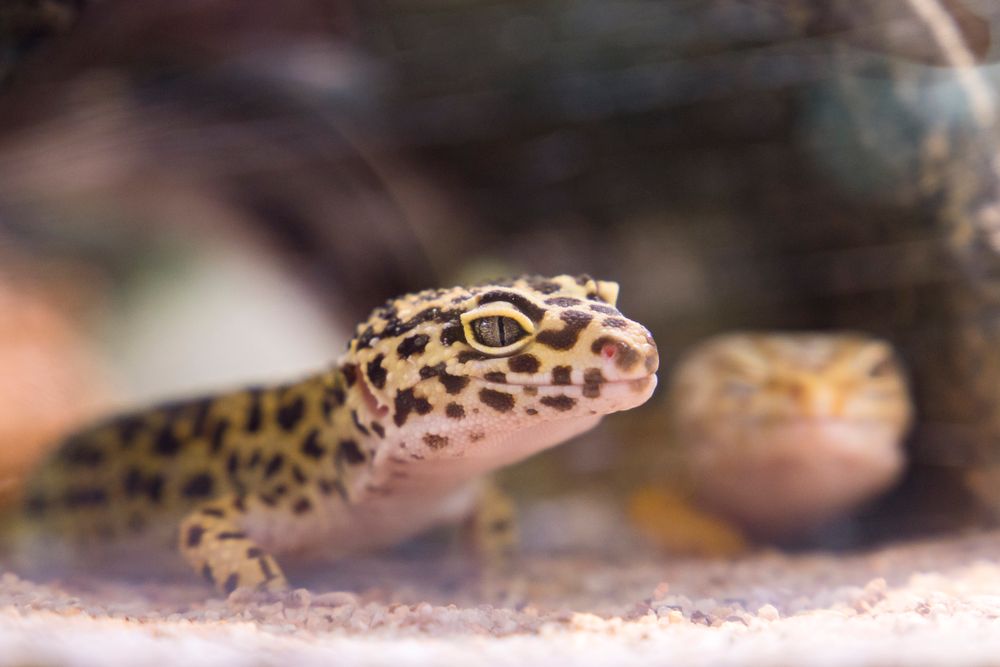
- Offer only a small number of insects at a time.
- Remove prey that is not eaten during the session.
- Use an escape-resistant dish for worms/roaches when practical.
- If loose substrate is used, feed over a solid dish or controlled feeding area to reduce accidental ingestion.
- Do not leave crickets roaming overnight.
- Do not use wild-caught insects from yards, parks or pesticide-treated areas.
Patify's leopard gecko substrate guide explains why feeding method changes substrate-ingestion risk.
Five Feeding Myths Worth Deleting
“Mealworms are a complete diet.”
No. Current veterinary guidance emphasizes feeder variety and gut-loading.
“Fruit is a healthy treat.”
PetMD advises against fruit/vegetables for this insectivorous species.
“More calcium is always safer.”
No. RSPCA explicitly warns that vitamins/minerals can be overdosed.
“UVB means you never need dietary calcium.”
No. UVB supports vitamin D physiology; calcium still has to come from the diet/supplement system.
“A fat tail means perfect health.”
No. Tail reserves matter, but obesity and disease can coexist; monitor the whole animal and weight trend.
Leopard Gecko Food: Fridge-Card Version
- Feed insects, not a fruit/veg diet.
- Rotate feeders: crickets, dubia roaches, calciworms/BSFL, mealworms and other appropriate live insects.
- Keep waxworms/superworms occasional.
- Juveniles: daily.
- Adults: about every other day.
- Use appropriately sized prey; the space-between-eyes rule is a conservative shortcut.
- Gut-load feeders before use.
- Dust according to one coherent UVB/supplement plan.
- Remove uneaten insects.
- Keep fresh water available.
- Track weight and body condition instead of copying a universal insect count.